Silicone Foam Is Shaping Professional Audio and Studio Techno
Key Sentences: Liquid silicone foam is mainly used in the manufacturing of sealing strips, gaskets, cushioning pads, foam sheets, foam tubes, and flexible silicone rubber products for automotive, electronics, home appliance, construction, and consumer product applications.
The automotive, electronics, and consumer product industries continue to evolve. As electric vehicles, smart devices, and energy-efficient appliances become more common, lightweight and high-performance foam components are increasingly used in door seals, battery cushioning, electronic padding, thermal insulation, and comfort layers. In these applications, the foam not only defines sealing and cushioning performance but also determines safety, durability, comfort, and user experience. For this reason, liquid silicone foam has become a critical material for modern sealing and cushioning applications.
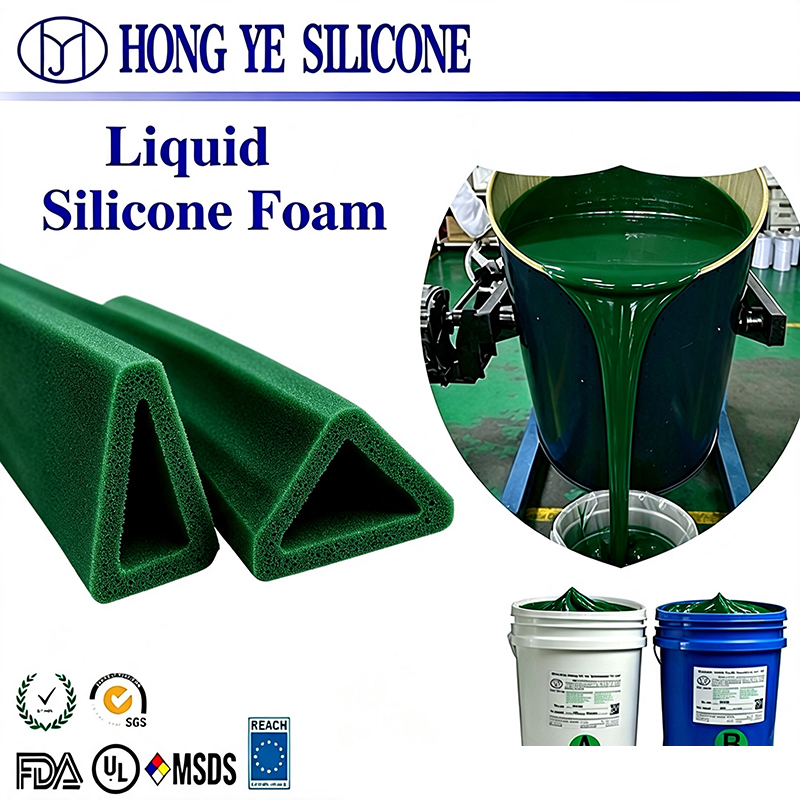
Liquid silicone foam is a category of addition-curing, two-component silicone rubber that expands through chemical foaming after A and B components are mixed. It is typically used to produce sealing strips, gaskets, cushioning pads, foam sheets, foam tubes, and flexible silicone rubber products. Compared with conventional polyurethane or EVA foams, liquid silicone foam offers better heat resistance, cold resistance, rebound resilience, aging resistance, and chemical inertness, while remaining soft, lightweight, and non-toxic. This makes it especially suitable for applications requiring long service life, wide temperature tolerance, and consistent performance.
In the automotive sector, door seals, trunk seals, window channels, seat cushions, armrests, and battery protection pads are often produced using silicone foam for sealing, cushioning, and insulation. Silicone foam can maintain its elasticity and sealing force under extreme temperature changes, reproducing the precise cross-sections required for water-tight and dust-tight sealing. At the same time, the high rebound and uniform cell structure of silicone foam help absorb vibration and reduce noise, improving ride comfort. For manufacturers, suitable silicone foam helps reduce the premature aging, compression set, and odor problems associated with conventional rubber and plastic foams, making it more suitable for long-life and high-performance automotive components.
In the electronics and home appliance industries, particularly for smartphones, wearables, power tools, and kitchen appliances, sealing, cushioning, and thermal protection are critical. Devices are increasingly compact and sensitive, so the foam used inside must resist heat, humidity, and compression over years of daily use. Liquid silicone foam offers a uniform cell structure and low compression set, which helps maintain consistent cushioning and sealing performance throughout the product's service life. At the same time, the high elasticity and skin-friendly nature of silicone foam allow it to provide soft support and protection for screens, batteries, and electronic components without damaging sensitive parts.
In sealing and cushioning applications, the performance of silicone foam directly affects product quality and service life. First, the foam must have a high and controllable expansion ratio — typically 2 to 7 times its original volume — so that density and softness can be adjusted to meet different application needs. Second, the cured foam should have uniform cells and good rebound so that it recovers its shape after repeated compression without permanent deformation. Third, long-term stability should be excellent, with low linear shrinkage, no migration or shrinking over time, and stable performance over a wide temperature range from -65°C to 200°C. In addition, flame retardancy, non-toxicity, and chemical inertness are essential for safety-critical and skin-contact applications.
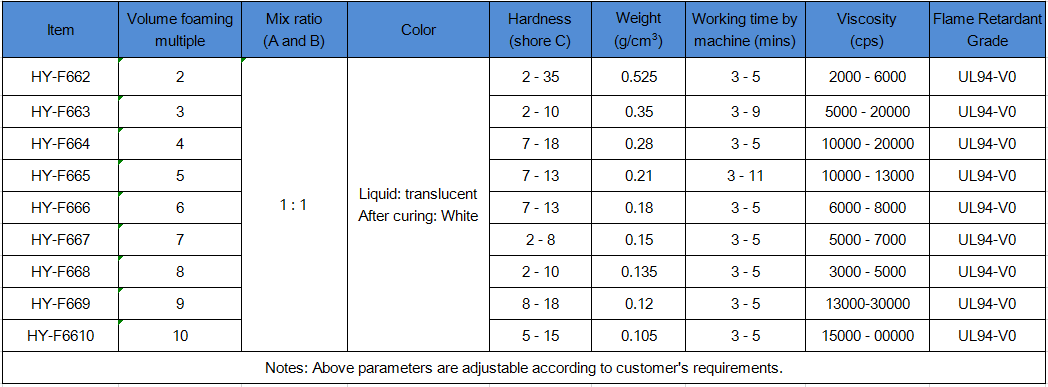
The application process for liquid silicone foam generally includes material preparation, mixing of A and B components at a 1:1 ratio, stirring for 2 to 3 minutes, vacuum degassing, pouring or injection, curing, and demolding. When producing thick or large foam parts, flowability and working time are especially important. High-quality liquid silicone foam can maintain a stable viscosity for a sufficiently long working time, allowing operators to mix, degas, and pour properly while avoiding bubbles and voids. For complex parts, pre-treatment of the mold, controlled curing temperature, and proper demolding design can further improve surface quality and production efficiency.
Today, the automotive, electronics, and consumer industries are demanding not just basic sealing and cushioning, but also higher precision, better consistency, longer service life, and shorter development cycles. Traditional foams often face problems of compression set, heat aging, odor, and limited temperature range when used in demanding applications. Liquid silicone foam helps address these challenges through its excellent thermal stability, rebound resilience, and durability, making it particularly useful for EV battery protection, smart device cushioning, high-temperature sealing, and hygiene-sensitive consumer products.
For manufacturers, selecting the right liquid silicone foam can improve product reliability, safety, and user experience while reducing warranty claims, maintenance cost, and material waste. As competition in automotive, electronics, and consumer manufacturing intensifies, material upgrades in silicone foam can drive efficiency improvements across the entire production chain. Looking ahead, liquid silicone foam will continue to play an increasingly important role in sealing, cushioning, insulation, and flexible silicone rubber applications.
 ∷
∷