Liquid Silicone Foam Became a Trusted Material for High-Risk
Introduction
In industries where failure is not an option — electric vehicle batteries, public transportation, power infrastructure, and medical facilities — material safety is the highest priority. Every component must withstand heat, resist flame, and perform reliably under stress. Liquid silicone foam has risen to this challenge, earning its place as one of the most trusted materials for applications where safety certification is not a luxury but a requirement.
Early Developments
In the early years, foam materials used in safety-critical applications presented serious concerns. Conventional polymer foams burned readily, released toxic fumes when heated, and degraded quickly under elevated temperatures. Testing standards were inconsistent, and buyers had little confidence that materials would perform as specified. For engineers designing systems where fire safety was paramount, the search for a material that combined cushioning performance with genuine flame resistance often ended in compromise.
The Platinum Cure Revolution
The emergence of platinum-catalyzed addition-curing silicone foam changed the safety equation fundamentally. Unlike organic foams, silicone's inorganic backbone gives it inherent heat resistance and flame retardancy that does not rely on hazardous additives. Platinum-cured chemistry also produced exceptionally clean, chemically inert materials with no toxic byproducts — properties that matter enormously in enclosed spaces, fire-sensitive environments, and applications involving prolonged human contact. For the first time, engineers could specify a cushioning and sealing material that met both performance and safety requirements without trade-offs.
Key Performance Advances
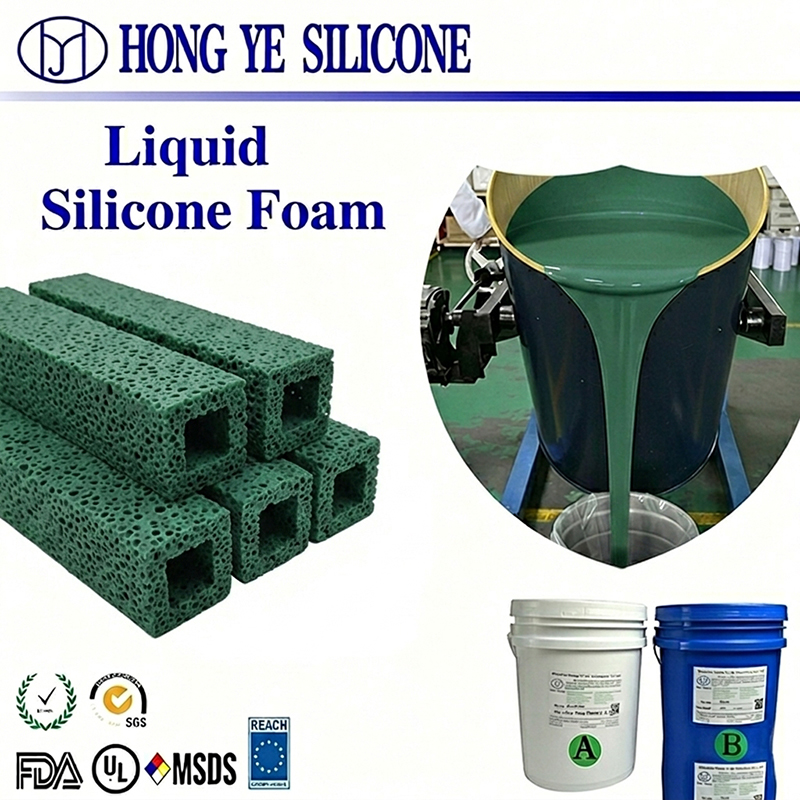
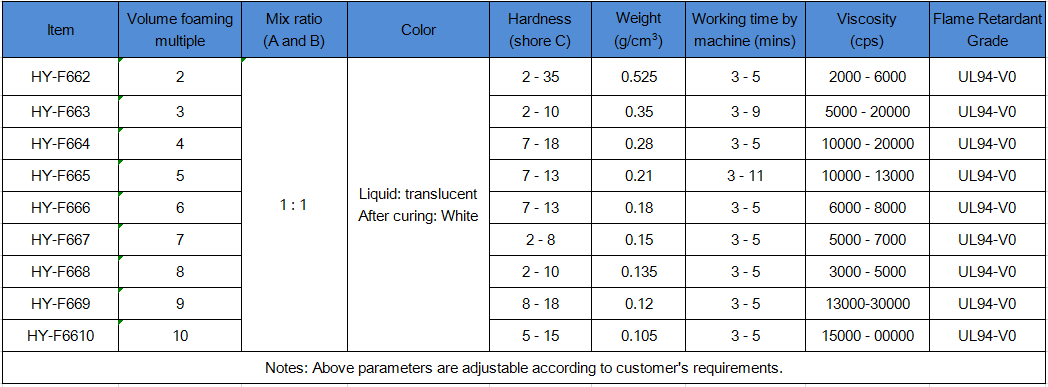
Modern liquid silicone foam grades, such as those manufactured by Hong Ye Silicone, are engineered with safety at the core. The material's inherent flame retardancy provides critical protection in fire-sensitive applications, while its wide service temperature range of -65°C to 200°C ensures stable performance under extreme thermal stress. The non-toxic, odorless, and chemically inert nature of platinum-cured foam eliminates concerns about off-gassing or contamination in enclosed systems. Excellent electrical insulation properties add another layer of protection in high-voltage environments. And with ISO9001 quality management, UL and CE certifications, and rigorous final inspection before shipment, buyers can specify the material with complete confidence in its compliance.
Application Expansion
Safety-certified silicone foam has become essential across the most demanding industries. In electric vehicles, it cushions and protects battery cells, where thermal stability and flame resistance are mission-critical. In public transportation — trains, buses, and aircraft — it provides seating comfort, vibration damping, and interior fire protection. In power and energy infrastructure, it seals and insulates control systems exposed to heat and electrical stress. In healthcare facilities, its non-toxic, clean nature makes it suitable for patient support equipment where safety standards are especially stringent. In each application, the common denominator is trust: engineers rely on silicone foam because it consistently passes the tests that matter.
Manufacturing Advancements
Achieving certified safety at industrial scale requires uncompromising manufacturing discipline. Modern facilities, like those operated by Hong Ye Silicone, combine automated production lines with comprehensive quality systems: raw material inspection, in-process laboratory testing, batch traceability, and final inspection before every shipment. ISO9001-certified processes, together with UL and CE compliance, give buyers documented assurance that every batch meets the same certified standards — a requirement for anyone supplying safety-regulated industries.
Future Directions
The future of safety materials points toward even higher standards and smarter protection. Formulations with enhanced fire-retardant performance for stricter building and transport codes, thermally conductive foams that actively manage heat in battery systems, and self-extinguishing grades for extreme environments represent the most promising research directions. As global safety regulations tighten and high-risk industries expand, the demand for certified, dependable silicone foam will continue to grow.
Conclusion
In a world where safety failures carry enormous human and financial costs, the choice of materials is a matter of trust. Liquid silicone foam has earned that trust through a combination of inherent chemistry, rigorous testing, and certified manufacturing — proving that cushioning, sealing, and protection do not have to come at the expense of safety. Companies like Hong Ye Silicone, with decades of formulation expertise, certified quality systems, and a commitment to international safety standards, continue to set the benchmark for materials that protect both people and the systems they depend on.
 ∷
∷