Automotive and Marine Mold Silicone Rubber: A Key Material Up
Keywords: automotive mold silicone rubber, marine mold silicone, yacht hull mold silicone, FRP mold rubber, low shrinkage mold silicone, high tear strength silicone rubber, large composite molding
Key Sentences: Automotive and marine mold silicone rubber is mainly used in the mold manufacturing of yacht hulls, automotive cover parts, FRP models, and large composite components.
The automotive, marine, and composite materials industries are continuing to evolve. As lightweight vehicles, luxury vessels, and advanced composite structures become more common, fiber-reinforced plastic (FRP) components are increasingly used in automotive body panels, yacht hulls, boat models, industrial prototypes, and large structural parts. In these applications, the mold not only defines the shape of the final product but also determines surface quality, dimensional accuracy, production efficiency, and replication reliability. For this reason, automotive and marine mold silicone rubber has become a critical material for large FRP mold manufacturing.
Automotive and marine mold silicone rubber is a category of addition-cure or condensation-cure silicone rubber designed for composite mold applications. It is typically used to build molds for yacht hulls, automotive body panels, boat models, FRP prototypes, and other large composite components. Compared with conventional rubber or plastic mold materials, silicone rubber offers better elasticity, heat resistance, aging resistance, and demolding properties, making it especially suitable for complex curves, fine details, and large-format part replication.
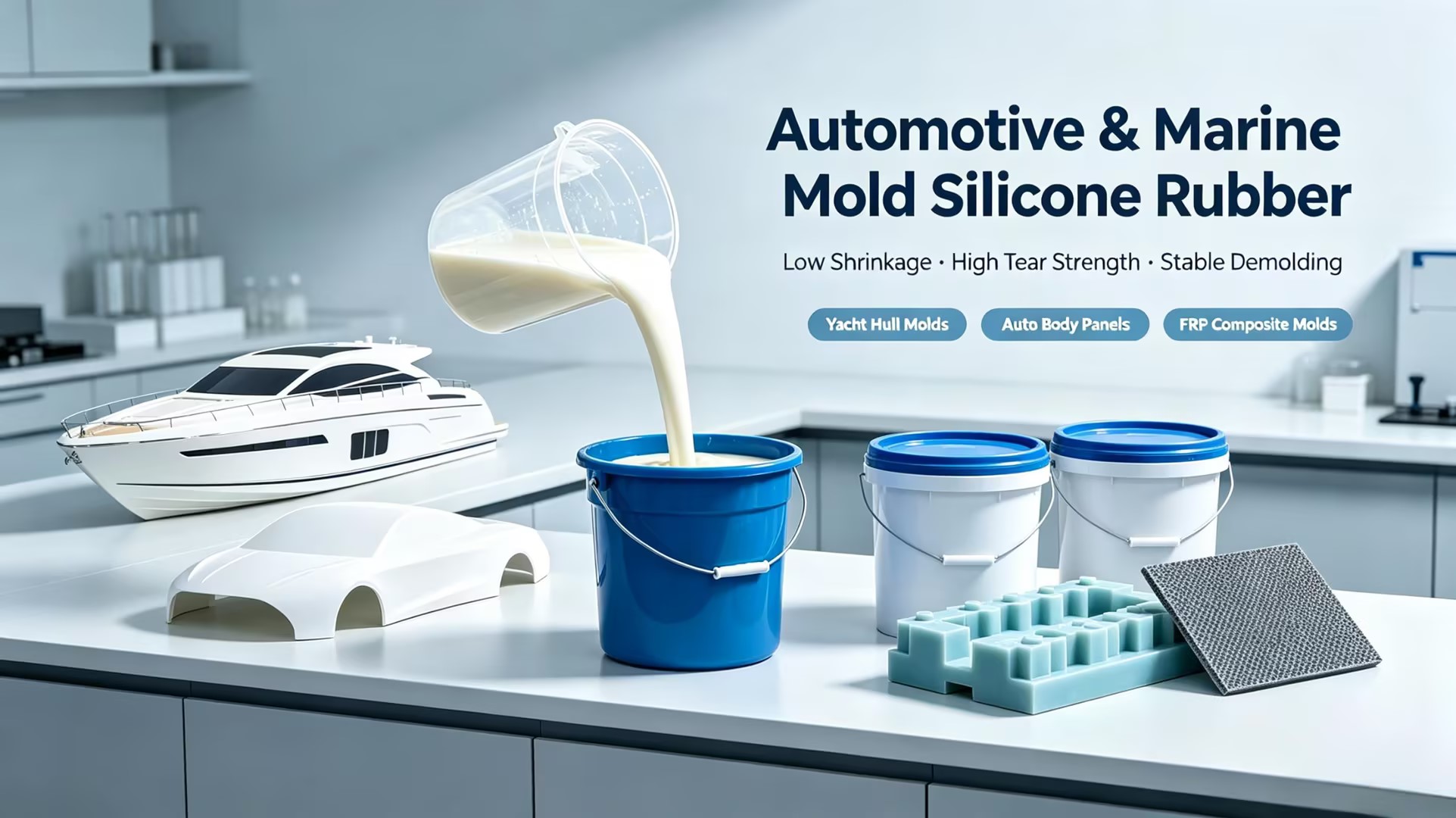
In the automotive sector, body panels, bumpers, spoilers, interior components, and some structural parts are often produced using FRP or composite processes for prototyping and low-volume production. Silicone rubber molds can conform closely to the master model surface, reproducing automotive curves, character lines, and local details while maintaining stable shape during resin casting or FRP lamination. For manufacturers, suitable mold silicone rubber helps reduce the long lead times, high costs, and modification difficulties associated with traditional metal molds, making it more suitable for multi-variety, low-volume, and complex automotive component production.
In the marine industry, particularly for yachts, speedboats, and high-end boat models, mold surface finish, streamlined geometry, and dimensional stability are critical. Yacht hulls are large and have complex curves, so the molding process is sensitive to material shrinkage, temperature variation, and construction technique. Automotive and marine mold silicone rubber offers low shrinkage, which helps preserve the geometric accuracy of the master model during curing and reduces subsequent mold correction work. At the same time, the high elasticity of silicone molds allows them to withstand significant demolding forces, making it easier to remove thin-wall or complex-curve parts without damage.
In the FRP process, the performance of mold rubber directly affects mold life and product quality. First, silicone rubber must have good flowability so that it can fully replicate fine textures, edges, and curved areas on the master model while minimizing bubbles and voids. Second, the cured silicone should have high tear strength to withstand repeated demolding, resin erosion, and local stress concentration, reducing the risk of mold cracking or deformation. Third, long-term shrinkage should be low so that the mold remains dimensionally stable over time and prevents accumulated part errors.
The application process for automotive and marine mold silicone rubber generally includes master model preparation, silicone compounding, vacuum degassing, casting or brushing, curing, demolding, and post-treatment. When building large yacht hull molds, flowability and process tolerance are especially important. High-quality mold silicone can maintain a stable viscosity for a sufficiently long working time, allowing operators to pour, edge-build, and vent the material properly. For complex components, layered casting, local reinforcement, and careful demolding design can further extend mold life.
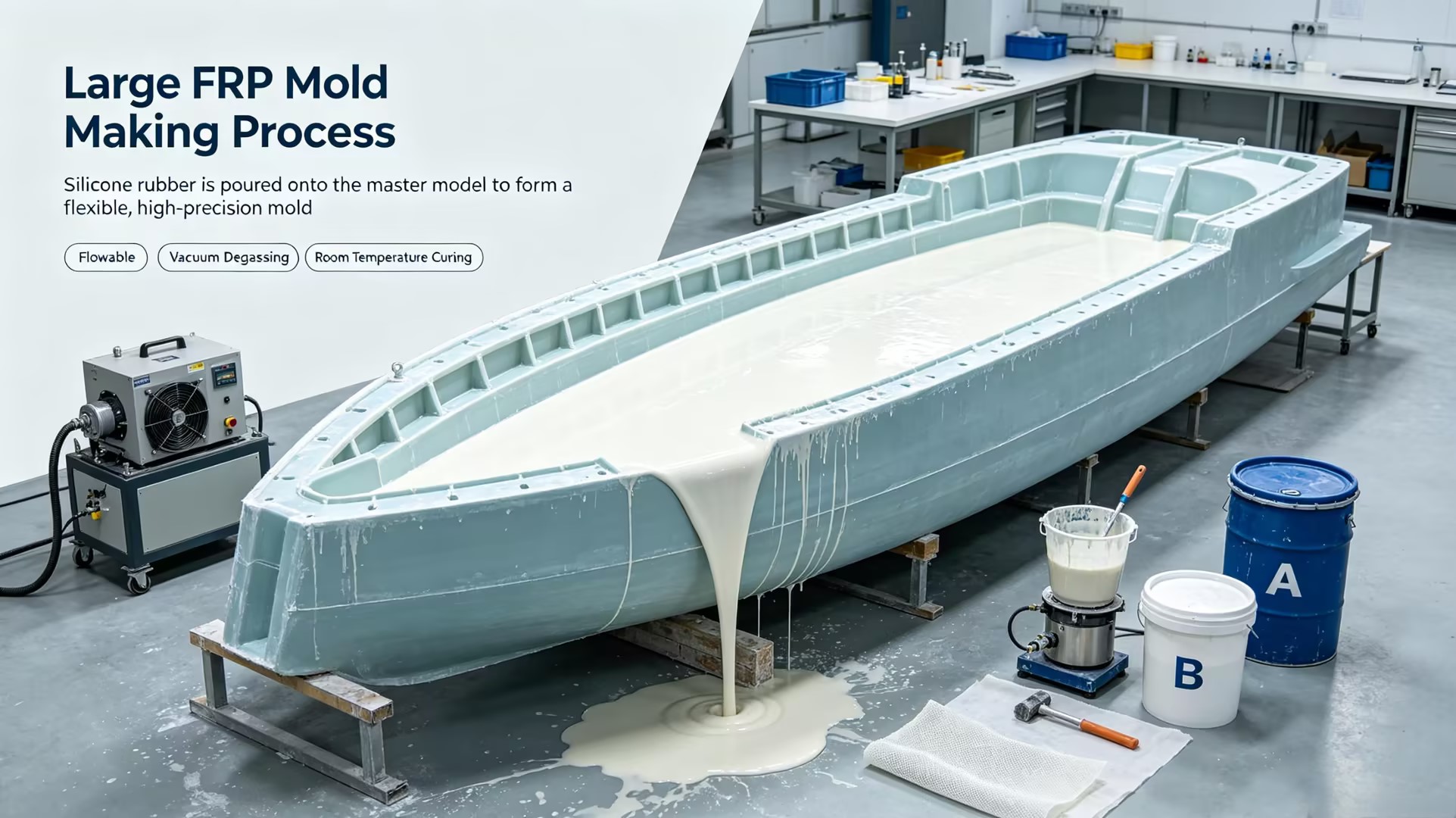
Today, the automotive and marine industries are demanding not just structural molding, but also higher precision, better surface finish, and shorter delivery times. Traditional mold materials often face high cost, long lead times, and limited flexibility when producing large, complex-curve, low-volume parts. Automotive and marine mold silicone rubber helps address these challenges through its flexible mold characteristics, making it particularly useful for prototype development, low-volume production, classic car restoration, yacht modification, and custom composite part manufacturing.
For manufacturers, selecting the right automotive and marine mold silicone rubber can improve product surface quality, dimensional accuracy, and production efficiency while reducing mold development time and prototyping cost. As competition in automotive and marine manufacturing intensifies, material upgrades in mold silicone can drive efficiency improvements across the entire production chain. Looking ahead, automotive and marine mold silicone rubber will continue to play an increasingly important role in large-format FRP molding.
 ∷
∷