How to Make Durable Pad Printing Heads: Manufacturing Process
The pad printing head is the core consumable in the pad printing process, and its quality directly determines print clarity, ink transfer efficiency, and service life. A well-made pad can print tens of thousands of times with stable results, while a poorly made pad may show wear, deformation, or uneven ink transfer after just a few hundred prints. Shenzhen Hongyejie Technology Co., Ltd. (Hongye Silicone) shares the complete manufacturing process and quality control checkpoints for each stage. 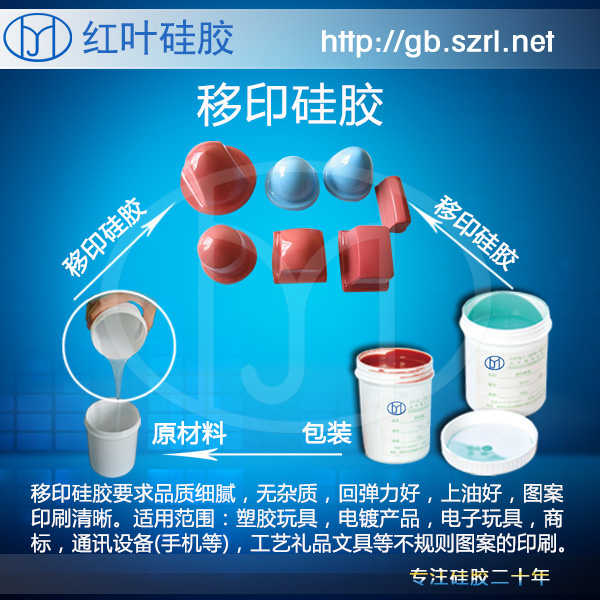
Step 1: Mold Preparation
The quality of the pad mold is the foundation of pad quality. Molds are typically made of aluminum alloy or resin, and the mold surface must be smooth, scratch-free, and pore-free. Before use, thoroughly clean the mold surface with alcohol or specialized cleaner to remove oil, dust, and residual silicone. After cleaning, apply release agent evenly. Do not apply too much, as excess release agent affects pad surface quality and causes poor ink pick-up. After application, gently wipe with a clean cloth to form a thin uniform film. Place the mold on a level stable surface to avoid uneven pad thickness.
Quality checkpoint: Mold surface must be 100% clean, release agent thin and uniform, mold placed horizontally.
Step 2: Silicone Ratio and Mixing
Selecting the right pad printing silicone model is critical. Hongye Silicone offers multiple models including the economical 901, wear-resistant 902, general-purpose 912, extra-soft 916, and addition-cure 928, chosen based on product material and printing requirements. Accurately weigh component A (silicone) and component B (curing agent) at the ratio specified in the instructions, using an electronic scale rather than estimation. Stir component A well first (sediment may form after storage), then add curing agent and mix thoroughly for 2-3 minutes until color is uniform with no streaks. Mix at moderate speed to avoid introducing excessive air bubbles.
Quality checkpoint: Ratio must be accurate, mixing must be uniform, color consistent with no streaks after mixing.
Step 3: Pouring and Degassing
Pour the mixed silicone slowly into the mold from one side, allowing it to flow naturally and cover the entire mold, avoiding direct impact that creates bubbles. After pouring, perform vacuum degassing by placing the mold in a vacuum chamber, pulling vacuum to -0.1 MPa, and holding for 3-5 minutes. The silicone will expand and rise then fall back as bubbles are extracted. Degas 1-2 times depending on viscosity and bubble content. If no vacuum equipment is available, let the poured mold rest for 10-15 minutes to allow large bubbles to rise naturally, then use a low-temperature heat gun to blow away surface bubbles.
Quality checkpoint: Pour slowly to minimize bubbles, vacuum degas thoroughly, no pores inside the pad.
Step 4: Curing and Demolding
After degassing, cover with a board if applicable, and cure at room temperature (25°C). Curing time is generally 2-4 hours depending on the model, with addition-cure silicones (like 928) curing slightly faster. Do not move the mold during curing, as vibration can cause internal defects. When cured, lightly touch the pad surface; it should not stick to fingers. Demold by gently peeling from the mold edge, gradually removing the pad, avoiding forceful pulling that can tear or deform the pad. After demolding, inspect the pad surface; it should be smooth, bubble-free, and defect-free.
Quality checkpoint: Allow sufficient curing time, demold only when not sticky, demold gently to avoid damage.
Step 5: Post-Treatment and Pre-Use Preparation
After demolding, the pad requires post-treatment. First, trim excess flash from the pad base with scissors or a blade to keep the base flat. Then clean the pad surface with water or specialized cleaner to remove residual release agent, as release agent affects ink adhesion. After cleaning, air dry or wipe with a clean cloth. Before first use, it is recommended to dab the pad surface with waste ink several times (commonly called "priming the pad") to help the surface adapt to ink and achieve more uniform ink pick-up. When installing on the pad printing machine, ensure the pad base fits tightly against the fixture without looseness.
Quality checkpoint: Trim flash clean, thoroughly remove surface release agent, prime the pad before first use.
Common Quality Issues and Root Causes
Bubbles on pad surface: Bubbles introduced during pouring not fully removed, or mixing too fast. Solution: Pour slowly, degas thoroughly under vacuum.
Pad not curing or sticky surface: Incorrect curing agent ratio, expired curing agent, or contact with sulfur, phosphorus, or nitrogen-containing substances causing inhibition. Solution: Use accurate ratio, replace curing agent, avoid contact with inhibiting substances.
Pad too soft or too hard: Wrong silicone model selected, or too much silicone oil added. Solution: Choose the appropriate hardness model for the application, reduce silicone oil amount.
Uneven ink pick-up: Residual release agent on pad surface, rough pad surface, or improper ink viscosity. Solution: Clean pad thoroughly, inspect mold surface, adjust ink viscosity.
Pad wears out quickly: Insufficient wear resistance of silicone model, or excessive printing pressure. Solution: Use a wear-resistant model (like Hongye 902), reduce printing pressure appropriately.
Hongye Silicone Quality Assurance
Hongye Silicone has focused on liquid silicone for over 20 years. Our pad printing silicone series uses premium raw materials and advanced formulations with excellent batch-to-batch consistency. We provide full technical support from model selection to process optimization, helping customers produce high-quality, long-lasting pad printing heads. Whether you need the economical 901, wear-resistant 902, general-purpose 912, extra-soft 916, or addition-cure 928, we have the right solution for your production needs.
 ∷
∷