Common Pad Printing Defects and Solutions: A Practical Troubl
In daily pad printing production, printing defects are a major factor affecting product yield and efficiency. Blurred patterns, ink breakage, ghosting, bubbles, and uneven ink transfer occur frequently, and many operators struggle to identify the root cause, leading to long downtime and material waste. Shenzhen Hongyejie Technology Co., Ltd. (Hongye Silicone) has compiled this practical troubleshooting guide based on years of industry experience to help companies quickly identify problems and restore production.
Blurred or Unclear Patterns
Blurred patterns are the most common defect. Main causes include: pad hardness too high or too low, resulting in insufficient contact with the product surface; pad surface worn or aged, losing elasticity; ink viscosity improper — too thin causing smudging, too thick causing buildup; plate etching depth too deep or too shallow; excessive press pressure causing over-deformation. Troubleshoot by first checking pad condition — replace if worn; then adjust ink viscosity and press pressure; finally inspect plate etching quality. Using a moderately hard general-purpose silicone (like Hongye 901) effectively reduces blur caused by hardness mismatch.
Ink Breakage and Missing Print
Ink breakage appears as missing ink at pattern edges or . Main causes: pad surface contaminated with oil or dust, affecting ink adhesion; ink dries too fast, setting before transfer; pad contact time too short; plate has dried ink clogging etched areas. Solutions: clean pad surface regularly, keep it clean; adjust ink drying speed, add slow-drying agent if needed; extend pad press dwell time slightly; clean the plate before each production run to ensure etched areas are clear. 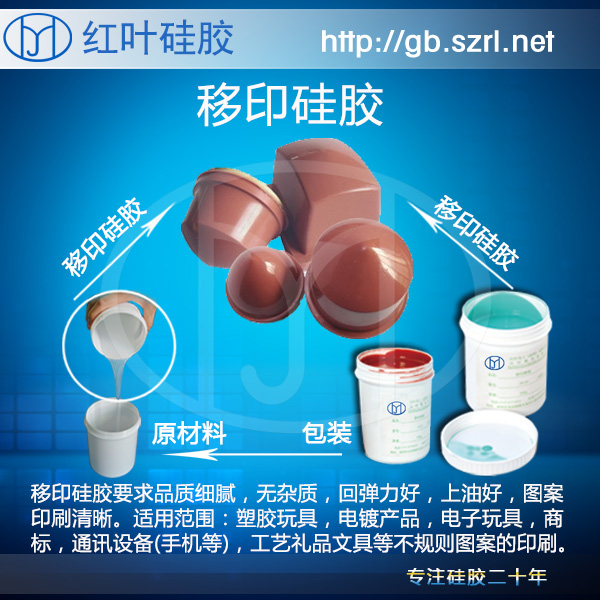
Ghosting and Misregistration
Ghosting refers to double outlines, while misregistration is color offset in multi-color printing. Main causes: pad resilience insufficient, slow recovery causing displacement; press machine positioning loose or fixture unstable; pad not securely mounted; workpiece positioning deviation in multi-color runs. Solutions: replace with a good-resilience quality pad; regularly check and tighten press positioning devices and fixtures; ensure pad is securely mounted; use precision positioning fixtures for multi-color printing, confirm first-article registration before batch production.
Bubbles and Pinholes
Bubbles on the pad surface or pinholes in printed patterns are mainly caused by: insufficient degassing during silicone pouring; dust or impurities in the pad mold; bubbles in the ink; micro pores on the pad surface. Solutions: always vacuum degas after mixing silicone; clean molds before use; stir ink and let it rest to release bubbles; if the pad surface has pores, gently polish with fine sandpaper before use. Hongye Silicone recommends slow pouring combined with vacuum degassing to effectively reduce bubble issues.
Poor Ink Adhesion (Easy to Rub Off)
If ink rubs off after printing, adhesion is insufficient. Main causes: product surface contaminated with oil, mold release agent, or dust; ink type mismatched with product material; curing agent not added or ratio incorrect; insufficient drying/curing time. Solutions: thoroughly clean product surface before printing, wipe with alcohol; select the correct ink type for the material (plastic, metal, glass, etc.); add curing agent at the correct ratio and mix thoroughly; ensure adequate drying time, use oven curing if necessary.
Prevention is Better Than Troubleshooting
Rather than waiting for problems to occur, daily maintenance prevents defects. Hongye Silicone recommends: replace pads regularly, change immediately when worn or elasticity drops; keep pads, plates, and fixtures clean after each run; mix ink as needed, avoid long storage; calibrate press pressure and positioning periodically; choose stable-quality pad printing silicone to reduce defects at the source.
Hongye Silicone offers a full range of pad printing silicones, including the economical 901, general-purpose 912, extra-soft 916, and addition-cure 928, meeting diverse production needs, along with professional technical support to help customers optimize their pad printing processes and improve yield.
 ∷
∷