Hongye HY-912 is a multi-color eco-friendly general-purpose two-component room temperature vulcanized (RTV-2) pad printing silicone developed by Shenzhen Hongyejie Technology Co., Ltd. specifically for export toys, gifts, electronics, stationery and promotional products industries. With a hardness of 25±2 Shore A, it sits in the golden hardness range for general-purpose use, delivering sharp clear patterns on flat surfaces while adapting to small curvature curved surfaces, making it an extremely versatile pad printing silicone.
As an eco-friendly export product, HY-912 passes EU RoHS 2.0 and REACH SVHC tests, meeting environmental requirements of major export markets including Europe, America and Japan, with complete test reports and COA certificates available. Multiple colors are offered including red, yellow, white and green standard colors, with custom Pantone color matching available on request. 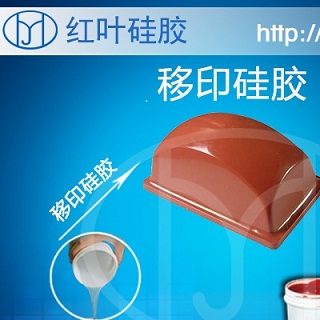
HY-912 features a mature stable formula with excellent batch consistency, ideal for export companies and high-volume continuous production requiring stable quality. Uniform ink pick-up and release delivers sharp clear patterns with clean edges. Good resilience allows quick recovery after repeated pressing, with service life meeting routine high-volume production needs. Moderate viscosity with good fluidity ensures easy pouring and degassing, simple operation with wide process window, allowing beginners to quickly master without repeated parameter adjustment.
Hongye Silicone has focused on liquid silicone for over 20 years, with a 20,000 square meter factory in Shenzhen producing over 500 tons of addition and condensation cure silicone monthly, supplying customers in more than 60 countries. HY-912 combines the performance quality of imported premium pad printing silicone with the cost advantages, short lead times and fast technical response of a domestic supplier, making it the preferred material for export companies seeking cost reduction and efficiency improvement.
Key Features
• RoHS 2.0 and REACH SVHC certified, meeting Europe America Japan export market requirements with complete test reports available
• Multiple colors available, red yellow white green standard colors, custom Pantone color matching on request
• 25±2 Shore A hardness, golden general-purpose hardness, handles both flat and small curvature curved surfaces
• Excellent batch consistency, mature formula, stable long-term supply quality, ideal for export companies
• Uniform ink pick-up and release, sharp clear patterns, clean edges without burrs, reliable print quality
• Outstanding resilience, quick recovery after repeated pressing, long service life for high-volume production
• Moderate viscosity and good fluidity, easy pouring with automatic degassing, simple operation wide process window
• Low exothermic peak during curing, friendly to pad molds and operating environment, minimal shrinkage
• Compatible with standard pad printing inks and eco water-based inks, excellent ink pick-up and release
• Standard 100:2 mixing ratio by weight, easy measuring for both manual operation and automatic dispensing
• Good aging resistance, no yellowing, no cracking, no oil bleeding over long-term use, stable appearance
• Backed by Hongye 20 years silicone manufacturing experience, supplying 60+ countries, fast technical support
Technical Parameters
表格
Model Color Hardness (Shore A) Viscosity (mPa.s) Working Time (min) Curing Time (h) Tensile Strength (MPa) Tear Strength (kN/m) Elongation (%) Mix Ratio (A:B) Density (g/cm3)
HY-901 R/Y/W/G 23±2 12000±2000 30-40 2-4 ≥3.0 ≥12 ≥300 100:2 1.12±0.03
HY-902 R/Y/W/G 28±2 15000±2000 30-40 2-4 ≥4.0 ≥18 ≥320 100:2 1.15±0.03
HY-912 R/Y/W/G 25±2 13000±2000 30-45 2-4 ≥3.5 ≥15 ≥350 100:2 1.13±0.03
HY-916 R/Y/W/G 16±2 10000±2000 30-40 2-4 ≥2.5 ≥10 ≥400 100:2 1.10±0.03
Note: Above are typical values, actual parameters refer to batch COA report. Test conditions: 25±2°C, 50±5% RH.
Application Scenarios
Export Plastic Toys and PVC Toys Industry
In the export plastic toy and PVC toy industry, pad printing is one of the most important decoration processes. Toy products come in diverse shapes including humanoid, animal, vehicle, spherical and irregular forms, with both flat and curved concave-convex surfaces, requiring high versatility and eco-friendliness from pad printing heads. Since toys directly contact children, they must meet toy safety standards and environmental requirements of major markets, with strict eco-certification requirements for pad printing materials.
Hongye HY-912 multi-color eco-friendly general-purpose pad printing silicone is designed for the export toy industry, with RoHS and REACH certification and complete test reports for export customs clearance and customer audits. The 25±2 Shore A hardness in the golden general-purpose range delivers sharp clear patterns and text on flat toy surfaces while adapting to small curvature surfaces on toy bodies and heads, handling multiple shapes with one pad type and reducing pad changes for improved efficiency. Multiple colors allow matching toy product colors to avoid pad color contamination on light-colored toys. Excellent batch consistency ensures stable quality in long-term high-volume supply, avoiding print quality fluctuations from material batch variations, making it a reliable choice for export toy companies.
Export Promotional Gifts and Advertising Giveaways Industry
The promotional gifts and advertising giveaways industry is characterized by extremely diverse products, small batches, tight deadlines and high customer customization. Common products include plastic cups, keychains, fridge magnets, pen holders, business card boxes, lighters, USB drive housings, phone stands and more, involving materials such as ABS, PP, PVC, PC and metal, with various surface shapes, requiring high flexibility from the pad printing process and versatility from pads. Promotional gifts often carry customer brand logos, requiring good print quality and certain environmental standards.
Hongye HY-912 multi-color eco-friendly general-purpose pad printing silicone is ideal for the promotional gifts industry. The general-purpose hardness handles flat and small curvature surfaces, allowing one material to address multiple product shapes and reducing inventory pressure. Simple operation with wide process window means no repeated parameter adjustment during frequent small batch multi-product changeovers, delivering high changeover efficiency perfectly suited to the industry production model. Complete eco-certification meets brand customer environmental requirements. Stable ink transfer and clear patterns ensure good customer brand logo printing, enhancing product value. Good resilience and long service life maintain stable performance through frequent changeovers and repeated use, with low overall usage cost.
Export Electronics and Stationery Industry
The export electronics and stationery industry requires high precision and consistency in pad printing. Electronic products such as charger housings, earphone shells, smart watch bands, Bluetooth speaker enclosures and remote control buttons require fine logos, symbols and text printing, demanding high pattern clarity and edge sharpness. Stationery products such as pen barrels, pencil cases, staplers, scissor handles and rulers involve large batch high-speed printing, requiring high wear resistance and long service life from pads. Both export electronics and stationery must comply with RoHS and other environmental directives.
Hongye HY-912 multi-color eco-friendly general-purpose pad printing silicone performs excellently in electronics and stationery industries. Fine texture and uniform ink transfer deliver sharp clear fine logos and small text with clean edges, meeting high precision electronics printing requirements. Good wear resistance and long service life ensure pad durability during high-speed large-batch stationery printing, reducing replacement frequency and improving efficiency. Complete eco-certification complies with RoHS directives with test reports available. Excellent batch consistency ensures stable quality in continuous high-volume production, avoiding defect rate increases from material fluctuations. Multiple colors allow selecting appropriate pad colors to avoid pad color transfer contamination on light-colored products.
Operating Instructions
Step 1 Pad Mold Preparation
Thoroughly clean the pad mold, ensuring the surface is free of dust, oil, residual silicone and other contaminants. Wipe the mold surface with alcohol or specialized cleaner, air dry, then apply release agent evenly. Use dedicated silicone release agent or petroleum jelly, applying a thin even coat without accumulation. Allow 5-10 minutes for the release agent to fully dry. Place the mold on a flat level surface to avoid uneven pad thickness during pouring.
Step 2 Component A Preparation
Before pouring, stir component A (base rubber) thoroughly for 1-2 minutes, as fillers may settle during storage. Stirring ensures uniform color and filler distribution. Scrape the bucket walls and bottom during stirring to ensure complete uniformity throughout the bucket. If taking a small portion from a large bucket, stir again after taking. Avoid introducing excessive air bubbles during stirring, use moderate stirring speed without aggressive agitation.
Step 3 Weighing and Mixing
Accurately weigh components A and B at a 100:2 ratio by weight. Use an electronic scale for precise weighing with error controlled within ±5%. After weighing, mix thoroughly for 3-5 minutes, continuously scraping the container walls and bottom during mixing to ensure complete uniform blending of A and B, avoiding local incomplete curing. Uniform mixing is indicated by completely consistent color without streaks or color blocks. If using automatic dispensing equipment, use a metering mixer with at least 16-element static mixing tube to ensure uniform mixing.
Step 4 Pouring and Degassing
Slowly pour the mixed silicone into the prepared pad mold from one side, allowing the silicone to flow naturally and fill the mold, avoiding direct impact that generates bubbles. Pour to about 80% full, excess silicone will discharge from vent holes when covering the board. If vacuum equipment is available, vacuum degassing is recommended: place the poured mold in a vacuum chamber, evacuate to -0.09 MPa, hold for 2-3 minutes until no more bubbles emerge from the silicone surface. Without vacuum equipment, let it rest for 5-10 minutes to allow bubbles to naturally rise and escape, or use a heat gun on low setting to quickly sweep the surface to help break bubbles.
Step 5 Curing and Demolding
After degassing, cover the board and cure at room temperature 25°C for 2-4 hours before demolding. Curing time is temperature dependent, lower temperatures extend curing time while higher temperatures shorten it. For faster curing, heat at 60°C in an oven for 30-60 minutes, but curing temperature must not exceed 100°C. After curing, open the board and gently remove the pad from the mold. Do not pull forcefully during demolding to avoid pad deformation or tearing. After demolding, let the pad rest in a cool dry place for 24 hours to allow full property stabilization before use.
Step 6 Use and Maintenance
Before use, gently wipe the pad surface with alcohol to remove dust and oil. For first use, test print on waste paper several times to allow the pad surface to fully ink up before formal printing. If residual ink or paper dust is found on the pad surface during printing, gently remove with clean non-woven fabric or adhesive tape, do not repeatedly wipe with solvent as this may accelerate pad aging. When not in use temporarily, wrap the surface with plastic film and store in a cool dry place away from sunlight and dust contamination. Store pads for different products separately to avoid cross-contamination.
Selection Guide
Hongye pad printing silicone offers four standard models covering all pad printing applications, with custom formulas available for bulk orders:
HY-901 (Economical General-Purpose, 23 Shore A): Entry-level preferred model, simple operation with wide process window, high cost-performance, ideal for newcomers, small batch multi-product frequent changeover companies, sampling and routine high-volume production. Choose this model for cost-sensitive SMEs and entry-level production.
HY-902 (Wear-Resistant, 28 Shore A): High wear resistance long life model, slightly higher hardness, excellent wear and tear resistance, ideal for high-volume continuous production, high frequency pressing products, hard flat product printing, stationery and tools requiring high wear resistance. Choose this model when pad service life is the primary requirement.
HY-912 (Multi-Color Eco General-Purpose, 25 Shore A): Export eco-friendly general-purpose model, RoHS and REACH certified, multiple colors available with stable batch quality, hardness in the golden general-purpose range handling both flat and small curvature surfaces, ideal for export toys, gifts, electronics, stationery and other industries requiring eco-certification, as well as export companies requiring high batch consistency. Choose this model when eco-certification, multiple color options and general-purpose performance are needed.
HY-916 (Extra-Soft, 16 Shore A): Extra-soft large curvature specialized model, low hardness with strong deformation capability, fully conforming to large radius curved surfaces, deep concave surfaces and irregular product surfaces, ideal for spherical, humanoid, animal shape and other large curvature toys, irregular gifts, irregular curved surface products. Choose this model when product curvature is large, irregularity is high, and standard pads cannot conform sufficiently.
If your project requires different hardness, color, curing speed, working time or special certification (FDA, LFGB, UL94), please contact Hongye technical support for custom formula. Custom minimum order quantity is 20kg, lead time typically 7-10 working days.
Recommended Application
Export toys gifts and electronics logo printing general-purpose eco-friendly pad printing head
Quality & Compliance
Every batch of Hongye HY-912 pad printing silicone is produced under ISO 9001 certified quality management system, with pre-shipment testing of viscosity, mixing ratio, curing time, hardness, tensile strength, tear strength, elongation, color and density. Each shipment includes a COA analysis report with actual test data and production date for that batch. Standard models pass EU RoHS 2.0 and REACH SVHC tests, with third-party test reports available on request.
Hongye Silicone has focused on liquid silicone R&D and manufacturing since 2005, with a 20,000 square meter modern factory in Shenzhen producing over 500 tons of various silicone monthly, supplying customers in more than 60 countries and serving over 10,000 enterprise customers. The company operates self-owned silicone polymer synthesis and compounding lines, fully controlling end-to-end quality from raw materials to finished products, ensuring batch consistency and long-term supply stability. 12 months shelf life when sealed and stored below 25°C.
Packaging
Standard packaging includes 1kg trial kit (approximately 980g component A + 20g component B), 5kg kit, 20kg drum, 25kg drum and 200kg drum. Components A and B are packaged in separate containers, component A is base rubber and component B is curing agent, mix at ratio before use. Custom packaging and private label (OEM) service available for orders above 200kg. Each package is clearly labeled with product name, model, batch number, production date, expiration date, mixing ratio, net weight and safety information. Packaging uses iron drums with inner plastic bags, providing good sealing performance and preventing leakage and moisture during transportation and storage.
Notes
Use polyethylene, nylon or nitrile gloves, do not use natural latex gloves. Avoid contact with sulfur-containing substances, amines, phosphorus compounds, tin-cure silicone and PVC, as these may inhibit the curing catalyst or affect the curing reaction. Use a calibrated scale to accurately weigh A and B at 100:2 by weight, mix thoroughly for 3-5 minutes scraping container walls and bottom. Heat curing temperature must not exceed 100°C. Maintain good ventilation during operation. Component B curing agent has mild irritation, avoid direct contact with skin and eyes, rinse immediately with plenty of water if contact occurs. Seal components A and B immediately after use to avoid moisture absorption or solvent evaporation from prolonged air exposure.
Storage
Store in sealed containers below 25°C in a dry ventilated place, away from direct sunlight, sulfur-containing substances, amines, food and strong chemicals. Shelf life is 12 months from production date. Seal immediately after taking material. Refrigeration at 5-15°C can extend shelf life, warm to room temperature before opening to avoid condensation. Store components A and B separately, do not mix during storage. Storage area should be away from fire and heat sources with good ventilation.
FAQ
Q: What is the difference between 912 and 901? How to choose?
A: 901 is economical general-purpose with 23 Shore A, high cost-performance, simple operation, ideal for entry-level production and cost-sensitive companies. 912 is multi-color eco general-purpose with 25 Shore A, RoHS and REACH certified, multiple colors available, better batch consistency, ideal for export companies and customers requiring eco-certification and batch stability. Choose 912 if products export to Europe America Japan or customers require eco-certification; choose 901 for domestic routine production with cost sensitivity.
Q: How long does a pad printing head last? When to replace?
A: Pad service life depends on printing frequency, product material, ink type, cleaning method and maintenance, typically 10,000 to 30,000 prints in routine high-volume production. Replace the pad when: surface becomes smooth from wear causing poor ink pick-up, blurred unclear patterns, pad hardens losing resilience, surface cracks or pinholes appear, pad color darkens or ink penetration cannot be cleaned. Regular cleaning and proper maintenance effectively extend pad service life.
Q: What causes incomplete curing or local tackiness? How to prevent?
A: Incomplete curing is almost always caused by contamination or ratio imbalance. Common causes include: insufficient or excessive component B curing agent, incomplete mixing of A and B, oil or release agent residue on mold or container surfaces, use of natural latex gloves (containing sulfur) inhibiting curing, low ambient temperature with insufficient curing time. Prevention measures: use nitrile or PE gloves, dedicated clean tools, accurate 100:2 weighing, thoroughly stir component A before mixing, scrape container walls and bottom during mixing, extend curing time or heat cure when ambient temperature is below 20°C.
 ∷
∷