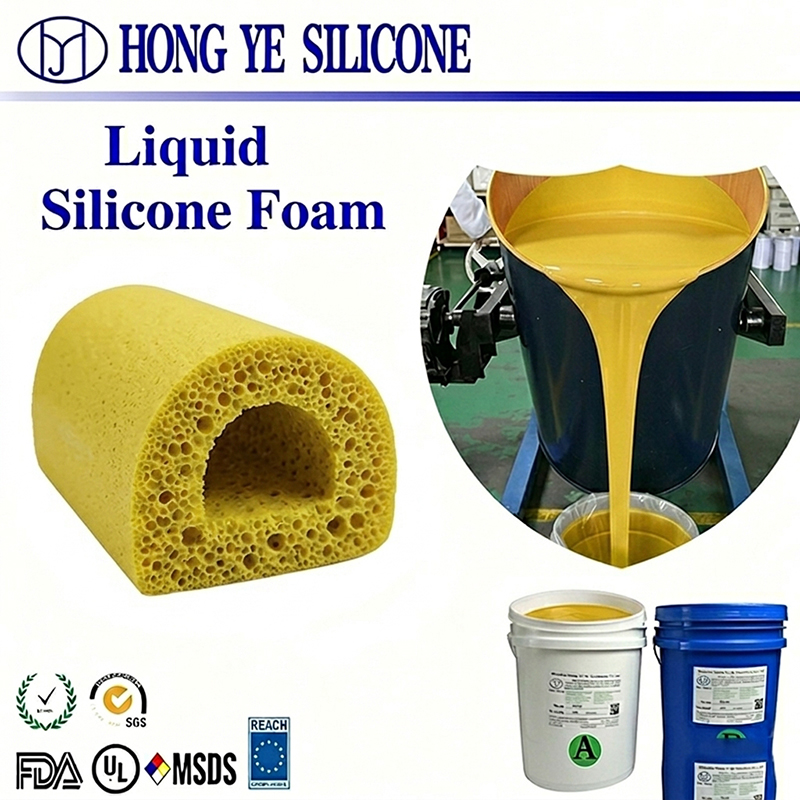
Thermal insulation foamed silicone is a two-component addition-curing silicone rubber that, upon thermal curing, expands into a lightweight, closed-cell silicone sponge with low thermal conductivity. It is commonly paired with High-Temperature Potting Silicone and Conformal Coating Silicone to build integrated thermal management solutions for electronic and industrial heating assemblies.
Core Product Features & Advantages
-
Low thermal conductivity: Uniform closed-cell matrix traps still air, minimizing heat transfer and maintaining stable insulation efficiency over time.
-
Lightweight load reduction: Low-density foam adds minimal weight to equipment, suitable for portable and aerospace-adjacent heating devices.
-
Broad thermal endurance: Retains insulating resilience from –60℃ to 220℃, with short-term exposure up to 250℃ without structural collapse.
-
Moisture-proof insulation: Closed-cell pores resist humidity absorption, preventing insulation degradation caused by water ingress in damp environments.
-
Vibration damping: Inherent silicone elasticity absorbs mechanical shock and noise, doubling as a cushioning layer in compressor and pump housings.
Step-by-Step Usage Instructions
-
Pre-stir Component A and Component B individually to re-disperse settled thermal fillers and ensure batch consistency.
-
Combine A and B at a 1:1 weight ratio and mix thoroughly for 2–3 minutes until a uniform color is achieved.
-
Degas under vacuum to eliminate entrained air, then dispense promptly into the insulation cavity or mould.
-
Cure at controlled temperature to trigger foaming and form a dimensionally stable thermal insulation foam layer.
Industrial oven door insulation gaskets, heating pipeline thermal wrapping layers, electric heater core insulation pads, LED lighting heat-buffer spacers, automotive battery compartment thermal barriers; used in conjunction with high-temperature adhesive to enhance the overall thermal efficiency of heating assemblies.
Store away from direct heat sources and UV radiation; avoid contact with sulfur, amine, tin-based catalysts and moisture prior to full curing, as these may inhibit foaming or cause surface tackiness.
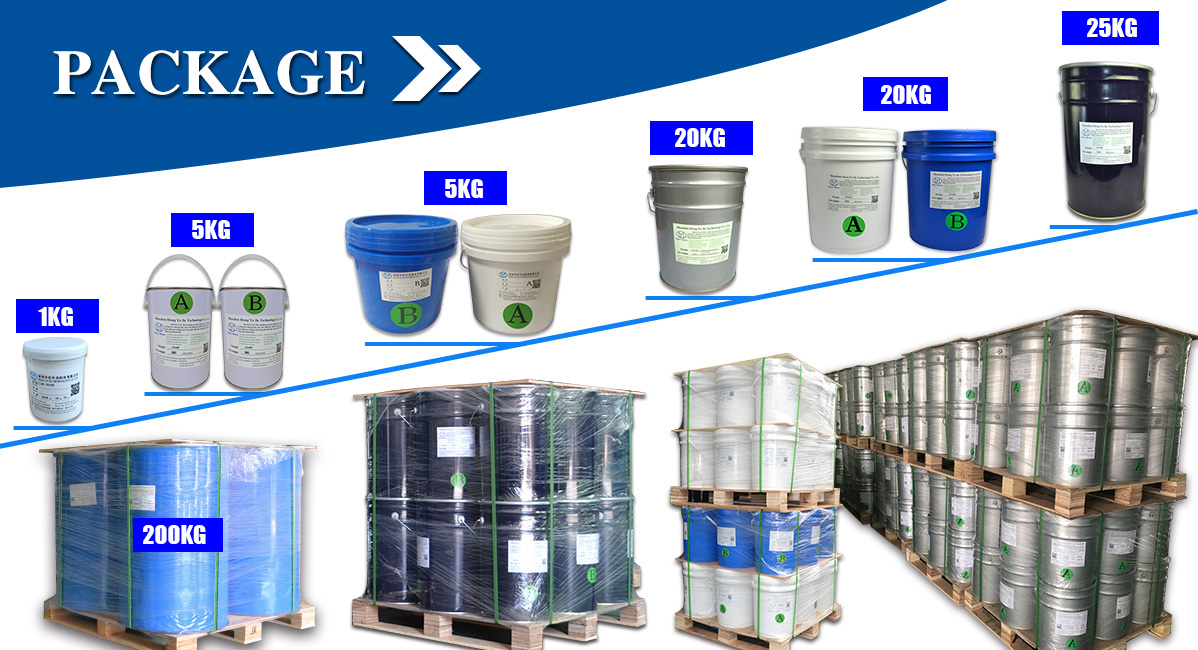
Available in multiple drum and cartridge sizes; classified as non-hazardous goods for standard freight; store in sealed containers in a cool, dry warehouse below 25℃.
Q1: Can this foam be used as a primary insulation layer for continuous 200℃ operation?
A1: Yes, its closed-cell silicone matrix maintains stable thermal conductivity and mechanical integrity under continuous 200℃ exposure, suitable for long-term high-temperature insulation duty.
Q2: Will the foam absorb water and lose insulation performance in humid environments?
A2: No, the dense closed-cell structure prevents moisture penetration, preserving insulation efficiency even in high-humidity or outdoor conditions.
Q3: Is the foaming ratio adjustable for different insulation thickness requirements?
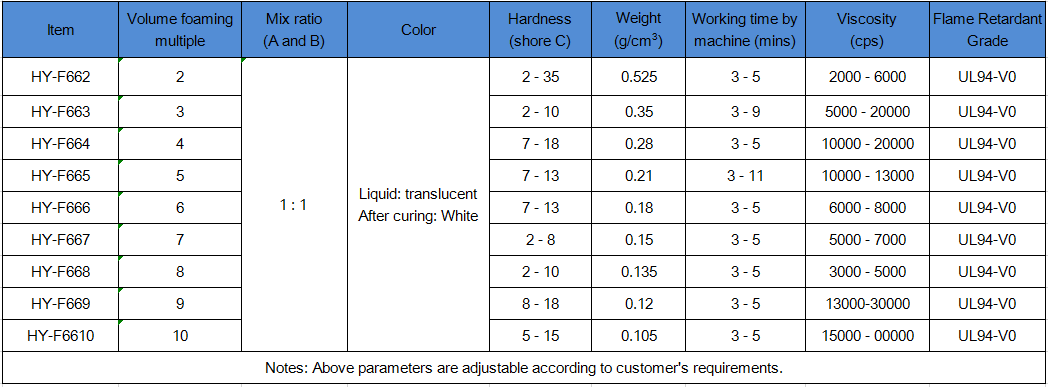
A3: Yes, expansion ratio can be tuned within 3~8 times by adjusting curing temperature and component ratio, allowing customised density and thickness for varied thermal management needs.
 ∷
∷