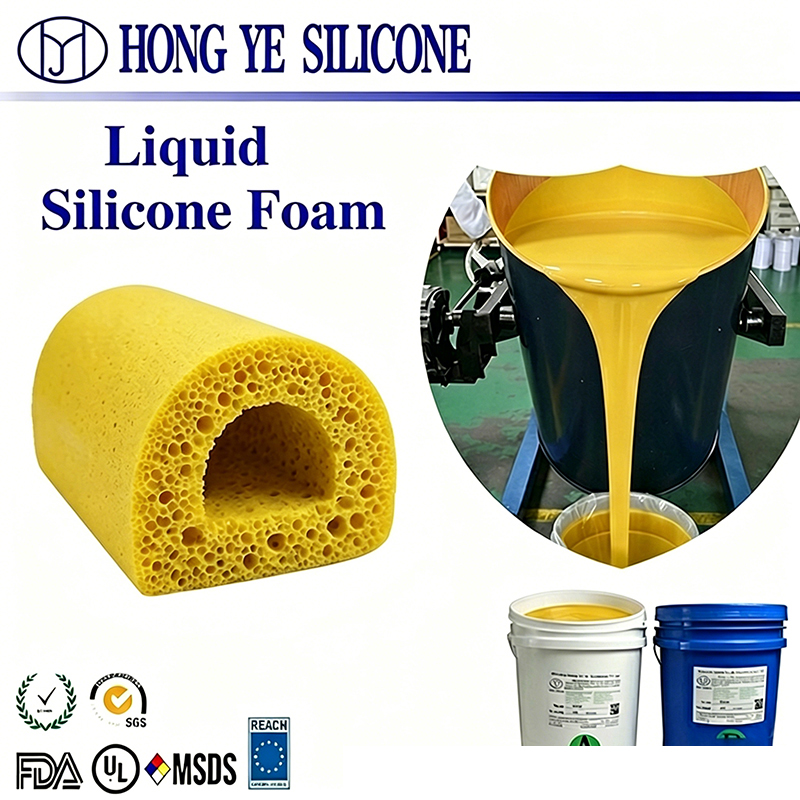
Addition-Cure Liquid Silicone Foam for Sealing and Cushioning
Liquid silicone foam is a professional two-component addition-curing silicone rubber designed for seals, gaskets, foam strips, foam boards, foam tubing and flexible cushioning parts. Composed of Part A base compound and Part B curing agent, it expands through chemical foaming after the two components are mixed at ambient or slightly elevated temperature, without high-pressure foaming equipment or complex injection machinery. Easy-to-process and highly versatile, this foamed silicone has become a mainstream material for seal manufacturers, cushioning producers and export-oriented silicone product factories around the world.
Different from general-purpose solid silicone rubber, this liquid foaming silicone is formula-optimized focusing on expansion control, cell uniformity, rebound resilience and dimensional stability. It solves common pain-points in sealing and cushioning production: uneven foam density, permanent compression set, batch-to-batch inconsistency and temperature-limited performance. It is widely applied to mold-made foam seals for automotive, electronics and household appliances, foam padding for shoes and furniture, as well as protective and comfort components for consumer goods. For years, it has maintained high market recognition as a reliable and cost-effective cellular silicone material.
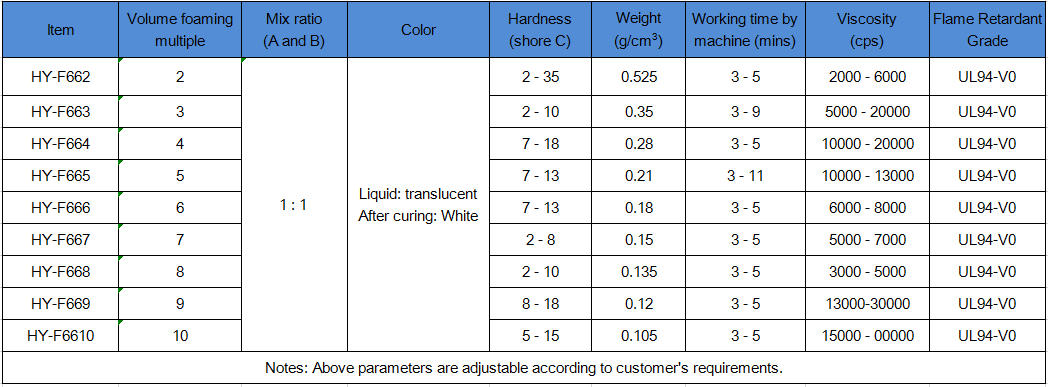
Outstanding foaming expansion stands as one of its most valuable product strengths. The liquid compound can expand to 2 times its original volume under nominal conditions, and up to 7 times at maximum, allowing manufacturers to adjust density and softness freely for different applications. Higher expansion directly lowers raw material consumption per finished part, cutting production cost without sacrificing performance.
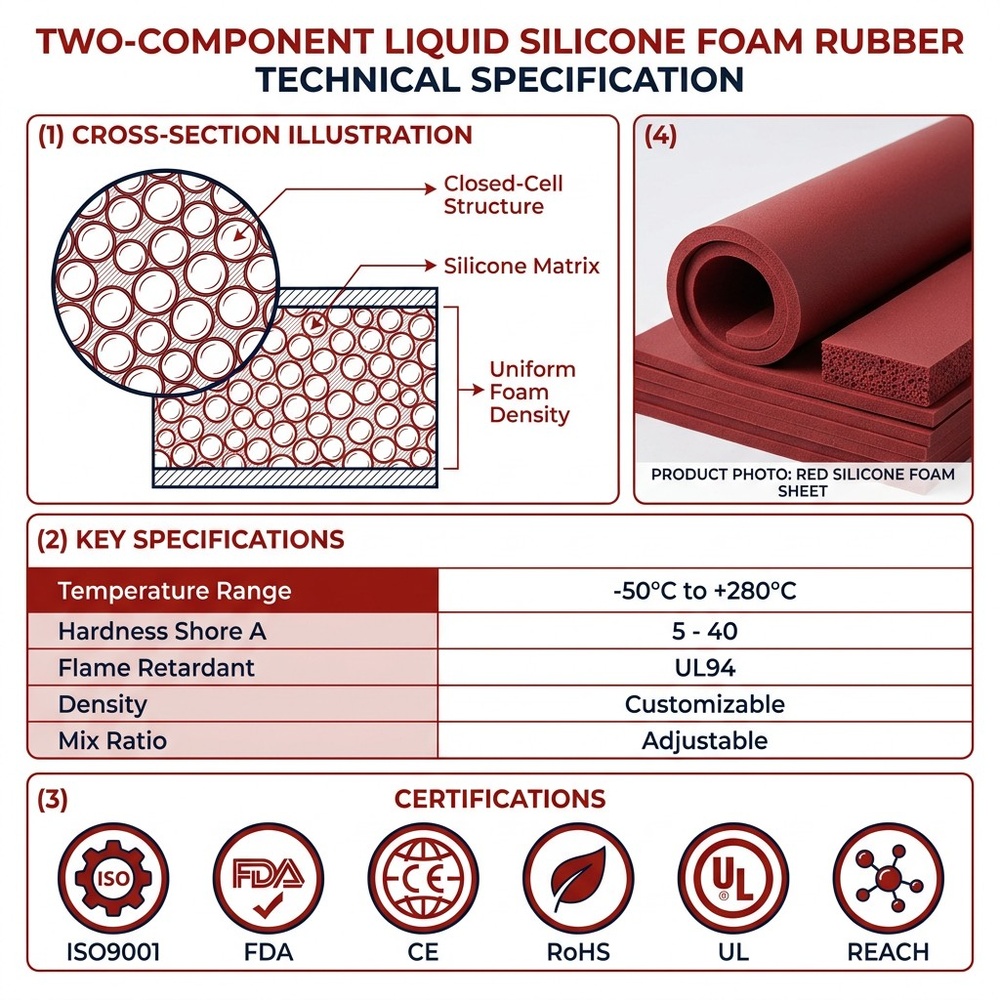
Uniform cell structure and low linear shrinkage are core indicators determining mass-production qualification rates. Inferior low-cost foaming materials often produce irregular bubbles, collapsed cells and unstable foaming behavior. Molds made from such material will yield inconsistent density and dimensions, raising scrap rates. High-quality liquid silicone foam adopts a stabilized formulation to keep uniform closed cells and minimal curing shrinkage. After full post-curing, the foam maintains stable size under repeated use, and every production batch keeps unified specifications, greatly cutting loss caused by dimensional deviation.
High rebound resilience extends product service life significantly. Many sealing and cushioning parts are repeatedly compressed during daily use. Ordinary polyurethane or EVA foam is easy to lose elasticity, flatten permanently or crack after limited cycles, forcing frequent replacement. This addition-curing foamed silicone is reinforced for rebound performance. The cured sponge maintains good flexibility and recovers its shape after each compression without permanent deformation. Under standard working conditions, one single component can serve for years, reducing replacement frequency and lowering total cost of ownership.
Wide temperature tolerance is another highlight optimized for demanding applications. The foamed silicone retains softness, elasticity and sealing performance from -65°C to 200°C, covering everything from freezer gaskets to engine-compartment cushioning. It combines good heat resistance, cold resistance, electrical insulation and inherent flame retardancy, making it suitable for safety-sensitive uses in electronics, appliances and vehicles.
Safety and environmental friendliness make it a trusted choice for skin-contact and consumer products. The material is non-toxic, non-corrosive, non-radioactive and chemically inert, with no odor and no harmful release during service. It is suitable for silicone insoles, sofa and mattress padding, bra pads, shoulder pads, infant pillows and other products that touch human skin directly. The closed-cell structure also resists moisture and sweat, keeping products hygienic and easy to clean.
As a two-component room-temperature material, it has low entry barriers for production operations. The mixing ratio of Part A and Part B is a simple 1:1 by weight, and full curing completes under ambient or mildly elevated temperature without special ovens. Small workshops, manual pouring lines and large-scale automated dispensing facilities can all adopt this material, with custom low-viscosity grades available for automated equipment.
Its application coverage is broad across industries. Applicable finished products include sealing rings, sealing pads, foam strips, foam boards, silicone foam tubing and copier or printer roller sponge sleeves; comfort products such as silicone insoles, sofa and mattress padding, automotive headrests, gear knob covers and seat cushions; wellness products including bra padding, shoulder pads, senior fitness equipment, maternity back supports and infant pillows; as well as internal filling for silicone robots, lifecasting mannequins and prosthetic devices, and lightweight damping material compatible with electronic potting compound assemblies.
To bring out full performance of liquid silicone foam, users should follow standard operating guidelines. Strictly stir Part A and Part B separately before use to reverse settling during storage. Mix the two components at a 1:1 weight ratio and stir continuously for 2 to 3 minutes until fully uniform. Vacuum degassing after mixing is strongly suggested to eliminate air bubbles and ensure uniform cells. The mixed material should be dispensed quickly to prevent premature gelling. Avoid sun exposure and high-temperature baking, and avoid contact with nitrogen, sulfur, phosphorus, tin, lead, cadmium, mercury, hexavalent chromium, PBB, PBDE or water, which may cause curing inhibition.
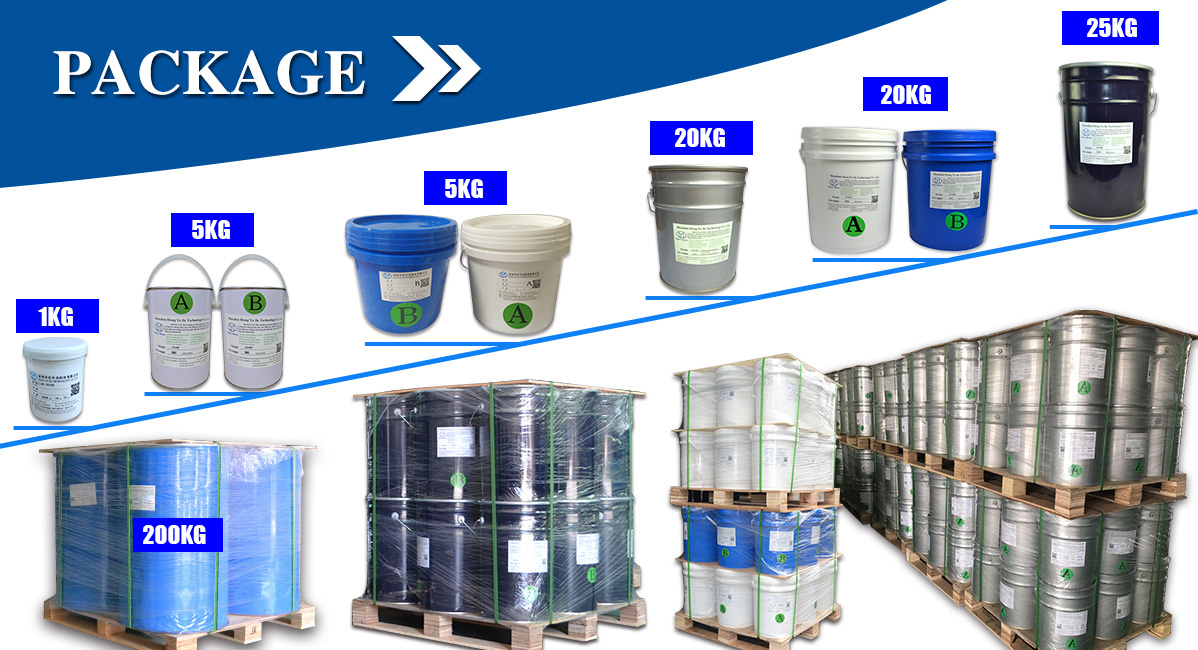
Packaging and storage are simple and transport-friendly. Part A is supplied in 25, 250 and 200 kg drums; Part B in 20, 25 and 200 kg drums. The product is transported as non-dangerous goods and stored sealed in a cool, dry place, with a shelf life of 12 months. Produced under ISO9001-certified quality management and available with UL and CE compliance, MSDS and SGS test reports, the material meets international export standards and is favored by overseas buyers sourcing silicone raw materials on B2B platforms.
In the global sealing and cushioning market, buyers keep raising requirements for durability, safety and cost efficiency. Liquid silicone foam combines high expansion, uniform cells, low shrinkage, high rebound, wide temperature tolerance and competitive price. It solves multiple bottlenecks brought by traditional polyurethane and EVA foams. It serves sample-making, small-batch trial-run and large-volume export production alike. For sealing, cushioning and silicone product manufacturers all over the world, this foamed silicone acts as a reliable foundational raw material to boost product quality and market competitiveness. As lightweight and high-performance cellular materials keep expanding global market share, high-quality liquid silicone foam will continue supporting factories to create more sophisticated sealing and comfort products.
 ∷