Liquid Silicone Foam Demand Surges asRenewable Energy Drive L
HONG YE SILICONE, Shenzhen, China — Global demand for liquid silicone foam, also known as foamed silicone or silicone sponge, is rising steadily as electric vehicles, renewable energy systems and lightweight industrial equipment seek a single material that seals, cushions and insulates. According to Morgan Reed Insights, the silicone foam market for electronics and electric vehicles was valued at about USD 1.18 billion in 2026 and is projected to reach USD 3.93 billion by 2035, a compound annual growth rate of roughly 14.3%.
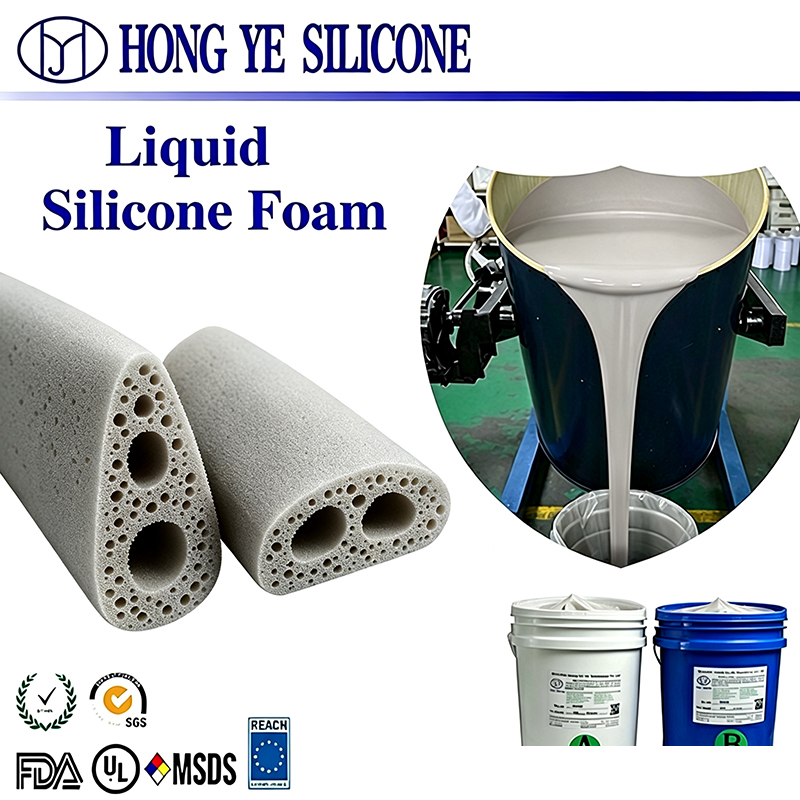
Electric vehicles are the fastest-growing driver. Foam silicone is now a functional interface material in battery packs — sealing pack perimeters against dust and moisture, cushioning cells against impact and vibration, and acting as a thermal barrier — as well as in electronic control units and charging ports, where flame retardancy and electrical insulation are required. Chinese industry reports note that foam silicone penetration in the new energy vehicle supply chain continues to rise as domestic material technology matures.
Beyond mobility, applications are expanding into solar inverters, wind turbine control systems and charging infrastructure, where lightweight silicone foam protects electronics from environmental stress. The material is also entering building-envelope and HVAC insulation, acoustic panels, healthcare wound-care interfaces, and the emerging low-altitude economy, including eVTOL aircraft and drones.
For suppliers, the shift favors materials with consistent foaming and wide service windows. HONG YE JIE Technology Co., Ltd., a professional manufacturer of addition-curing RTV-2 silicone rubber, recently launched a versatile liquid silicone foam for the automotive market (announced October 16, 2026). The two-part, platinum-cured addition-curing silicone offers a tunable foaming ratio from 2× to 7× volume expansion, with evenly distributed pores, low linear shrinkage and stable rebound. It supports long-term service from -65°C to 200°C, is non-toxic, non-corrosive and non-radioactive, and is available with OEM customization of hardness, density and packaging.
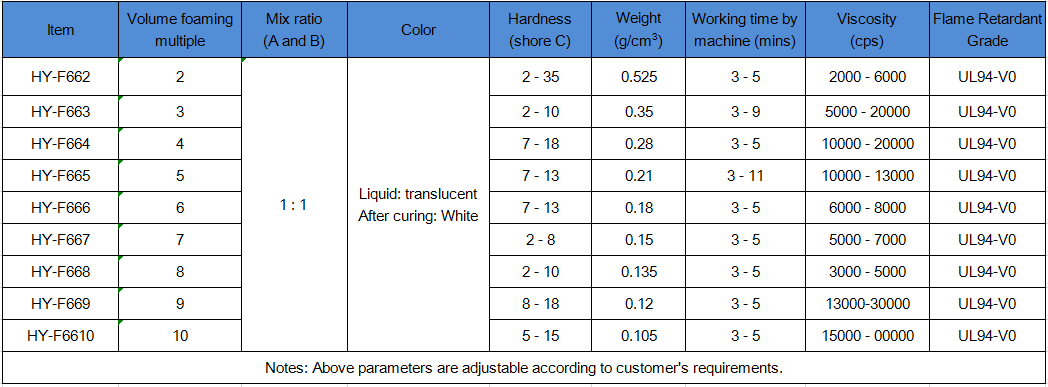
As global buyers seek lighter, safer and more reliable sealing and cushioning solutions, liquid silicone foam is moving from an auxiliary filling material to a strategic functional material across the EV, energy and industrial sectors.
 ∷