Experienced Addition Curing Silicone Company Which is Better
Ask five suppliers how long they have been making addition curing silicone and you will get five impressive numbers. Ask them what hardness their quoted grade is, and two of them will go quiet. Experience in the industry and experience with your part are different things, and only the second one shows up in your reject rate.
The practical question is not who has been around longest. It is which supplier can still answer you in month six, when a mould starts behaving differently and you need a technical explanation rather than a replacement drum.
What "experience" should mean on a quotation
An experienced supplier reads your part before quoting. The useful questions come in a particular order: what the master is made of, how deep the undercuts run, how thick the section is, how many casts are expected, and whether the finished piece touches food or skin. From those answers comes a hardness band and a mixing ratio.
When that sequence is missing, the quote is really just a price. That is why two suppliers can offer the same figure per kilogram and produce completely different results in production.
Five checks that separate them
The curing route, stated plainly. Addition curing, also called platinum cure, crosslinks without releasing by-products. The master stays clean and dimensions hold across a run. Condensation curing is cheaper and releases by-products, and it needs a much closer look where the finished piece contacts food.
Hardness in Shore A. Not "soft", not "standard". A number, in writing, matched to your section and undercuts.
A sample per batch. Traceability is what turns a complaint into an investigation. Without retained samples, nobody can compare delivery two against delivery three.
Documentation that maps to the model. ISO 9001, RoHS, REACH, FDA, UL and CE are the common requests. Coverage of your product group matters more than the size of the folder.
A trial before volume. Casting a small quantity on your own master is how you check release, texture and shrinkage before committing to production.
Company profiles, compared
|
Dimension |
Trading company |
Small workshop |
Manufacturer with in-house compounding |
|
Material origin |
Bought and resold |
Base material bought in |
Formulated on site |
|
Technical advice |
Forwarded upstream |
Practical but narrow |
Answered by the people who made the batch |
|
Batch consistency |
Depends on the maker |
Shifts between lots |
Sampled and released per lot |
|
Documentation |
Passes on the maker's file |
Limited scope |
Issued for the product group |
|
Trial size |
Often a full container |
Possible, stock dependent |
Small trial with pre-production cast |
|
If something goes wrong |
Everyone waits on a third party |
Little capacity to investigate |
Batch can be traced and re-checked |
A trading company can be perfectly efficient when you buy one standard grade in steady volume and already know the material. The model becomes fragile as soon as the requirement moves: a firmer grade, a colour change, a document a customer asks you to pass upstream.
A small workshop, on the other hand, will often take the ten kilogram order that a factory declines. Its exposure is consistency, because small-lot mixing depends on whoever weighed and stirred that afternoon. On a mould that runs for a season, that variation appears as uneven surface after a few hundred pulls.
Matching the grade to the job
Fine figurines, jewellery masters and confectionery moulds sit at the soft end, roughly 10 to 20 Shore A, where the rubber can leave a deep relief without tearing a thin edge.
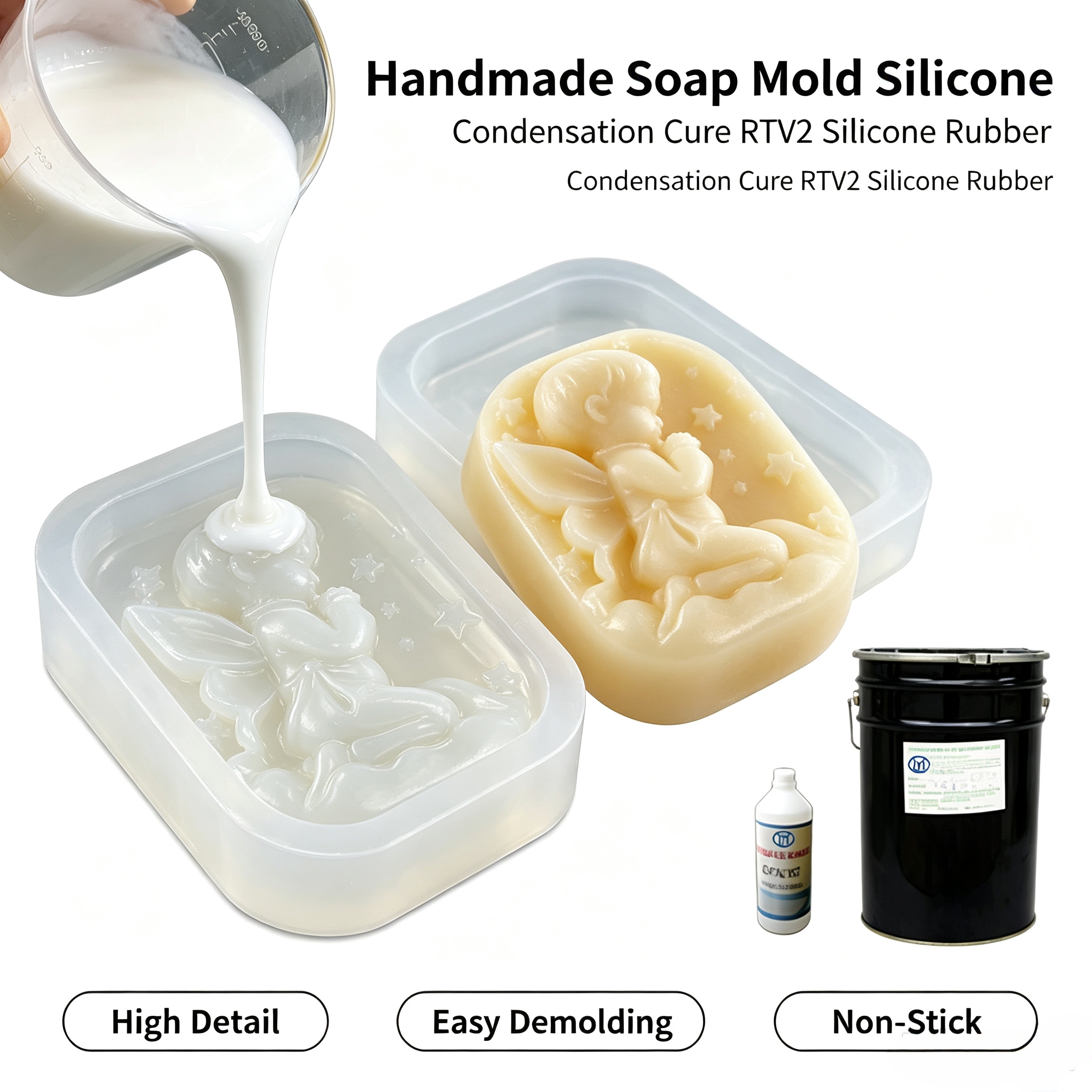
Soap, decorative panels and general casting usually land between 20 and 30 Shore A, balancing surface copy against a mould that keeps its shape.
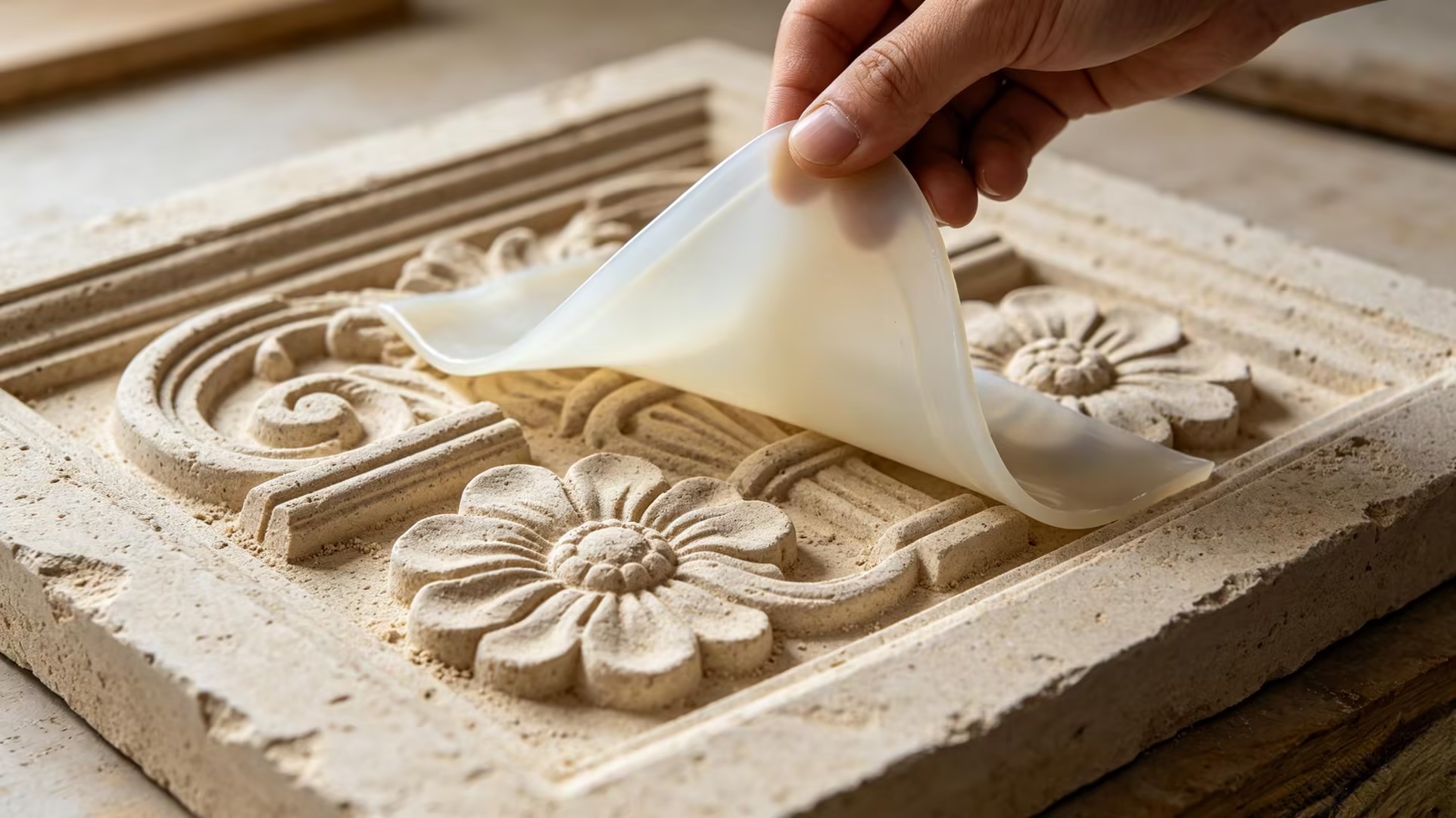
Cultured stone, GRC and cement castings move to 35 to 50 Shore A, where the mould has to resist the weight of a wet mix rather than follow a curve.
A trial protocol worth repeating
Order a small quantity and cast it on the master you actually sell, not a test block. Compare the third pull against the first. Look for four things: whether the finest relief still reads, whether the surface sheen has changed, whether the mould returns to true, and whether release now needs noticeably more force.
Keep a cured offcut from each delivery, labelled with the batch number. Comparing a new delivery against a retained piece by feel and hardness takes a minute and catches more drift than any certificate.
Buyers who need documentation, adjustable hardness and traceability generally settle on a manufacturer with in-house compounding. HONG YE SILICONE produces addition curing mould silicone in the HY-E series from 10 to 50 Shore A, in 1:1 and 10:1 mix ratios, retains batch samples for traceability, and issues ISO 9001, RoHS, REACH, FDA, UL and CE documents by model where they apply. Export trial orders start at 10kg, and a pre-production cast on your own master is part of the process.
Rather than comparing years in business, ask for a model that fits your part, cast it on your own master, and judge the third pull. Then ask what happens if delivery six differs from delivery one. That answer, not the company history, is what you are buying.
 ∷
∷