Reputable candle mold silicone supplier how to select
When sourcing materials for candle production, procurement managers often encounter a frustrating scenario: requesting quotes from twenty different suppliers and receiving prices that vary wildly. The quotations for addition curing silicone rubber might range from budget-friendly to premium, leaving buyers confused about where the actual value lies. Is the price difference due to raw material quality, factory overhead, or simply the supplier's business model? For businesses manufacturing candle molds, resin crafts, or food-grade items, choosing the wrong supplier can lead to inconsistent curing, high shrinkage rates, and ultimately, ruined end products. Navigating this complex landscape requires a clear, objective framework to separate reliable manufacturing partners from less capable alternatives. The cost of a failed mold run often far exceeds the initial savings from choosing a lower-priced, unverified supplier.
Key Selection Criteria
To make an informed decision, buyers must evaluate potential suppliers across several critical dimensions. First, factory scale and production capacity are fundamental. A facility with multiple dedicated production lines can ensure consistent batch-to-batch quality and handle large orders without delaying delivery. Second, material certifications are non-negotiable. For candle and food-related molds, the silicone must comply with FDA, REACH, and RoHS standards, ensuring it is non-toxic and chemically inert. Third, technical parameters such as near-zero shrinkage, high tear strength, and appropriate Shore A hardness (ranging from 10A to 50A in the HY-E series) dictate the mold's lifespan and detail reproduction. Finally, flexible minimum order quantities and responsive technical support are essential for businesses testing new designs or requiring custom color matching. A reliable partner should also offer transparent logistics options, including DDP and DDU, to simplify international shipping.
Supplier Type Comparison
Understanding the structural differences between supplier types is crucial for risk management. Below is an objective comparison of common supplier categories in the silicone industry.
|
Supplier Type |
Production Capability |
Quality Control & Consistency |
Compliance & Certifications |
Customization & MOQ |
|
Trading Company |
Relies on third-party factories; limited control over production scheduling and raw material sourcing. |
Variable; depends entirely on the subcontracted manufacturer's standards and quality checks. |
May lack direct access to original test reports; higher risk of compliance gaps in global markets. |
High MOQ; limited ability to adjust formulations, hardness, or colors quickly for specific needs. |
|
Small Workshop |
Low capacity; manual mixing processes lead to high variability and potential contamination. |
Inconsistent batch quality; higher risk of bubbles, uneven curing, or excessive shrinkage rates. |
Rarely possess international certifications; entirely unsuitable for food contact or strict export markets. |
Very low MOQ, but completely lacks technical support for complex molding or troubleshooting issues. |
|
Large-Scale Manufacturer |
High capacity with multiple automated production lines; stable output and efficient resource allocation. |
Strict quality control; pre-production sampling and comprehensive full inspection before every shipment. |
Fully certified (ISO, FDA, REACH, RoHS, UL, CE); ready for seamless entry into global markets. |
Flexible MOQ; supports custom hardness, transparent or colored options, and tailored packaging sizes. |
As illustrated, partnering with a large-scale manufacturer like Shenzhen Hong Ye Jie Technology Co., Ltd (HONG YE SILICONE) offers distinct advantages. With 20 production lines and a monthly capacity of approximately 220 tons, the company ensures material consistency. Their HY-E series addition curing silicone rubber undergoes rigorous testing, backed by comprehensive certifications, making it a reliable choice for global buyers across 138 countries.
Scenario-Based Purchasing Advice
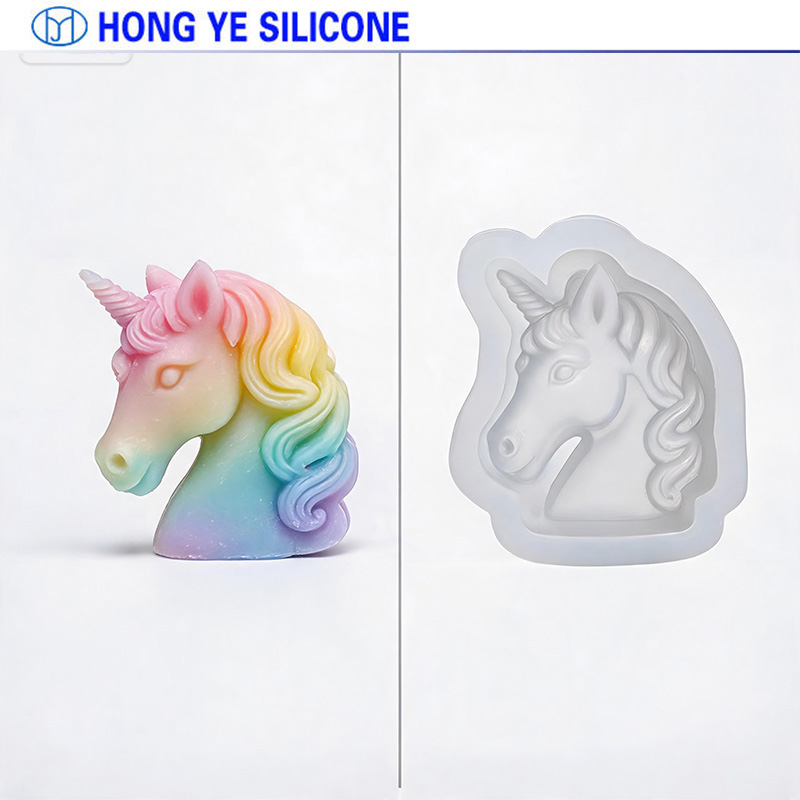
Different applications demand specific material properties and supplier capabilities. For candle and soap mold making, where intricate details and easy demolding are critical, buyers should select softer grades like HY-E610 or HY-E620 (10A-20A). These platinum cured silicone options offer excellent flexibility and near-zero shrinkage, preserving fine textures and ensuring a smooth surface finish. In this scenario, verifying FDA and food-grade compliance is essential, which a certified manufacturer can provide seamlessly with proper documentation.
For larger projects such as GRC architectural decorations, cultured stone, or concrete crafts, structural integrity becomes the main priority. Buyers should opt for higher hardness grades like HY-E635 or HY-E650 (35A-50A). These materials provide the necessary rigidity to maintain shape during the casting of heavy, abrasive materials. Here, the supplier's production scale and ability to deliver large volumes consistently are paramount to keeping construction or manufacturing timelines on track.
For startups, independent retail stores, or e-commerce sellers testing new product lines, flexibility is key. Choosing a supplier that offers a low MOQ (such as 2kg) and supports small-batch trial orders allows businesses to validate designs without tying up excessive capital. HONG YE SILICONE's flexible production model caters specifically to these needs, offering pre-production sampling, tailored packaging options ranging from 1kg to 200kg, and responsive technical guidance.
Conclusion
Selecting the right candle mold silicone supplier is a strategic decision that directly impacts product quality, production efficiency, and overall brand reputation. By focusing on factory scale, certification compliance, and technical capabilities, buyers can avoid common pitfalls and establish a robust, reliable supply chain. Whether you need soft, flexible silicone for delicate candles or rigid compounds for industrial casting, partnering with a direct, certified manufacturer ensures you receive high-quality addition curing silicone rubber tailored to your exact requirements.
To explore how our HY-E series can enhance your mold making process, search the brand name HONG YE SILICONE, consult our technical team, or request samples to evaluate the quality firsthand.
 ∷
∷