Oil Bleeding in Jelly Gel: Causes and Solutions
1 Introduction
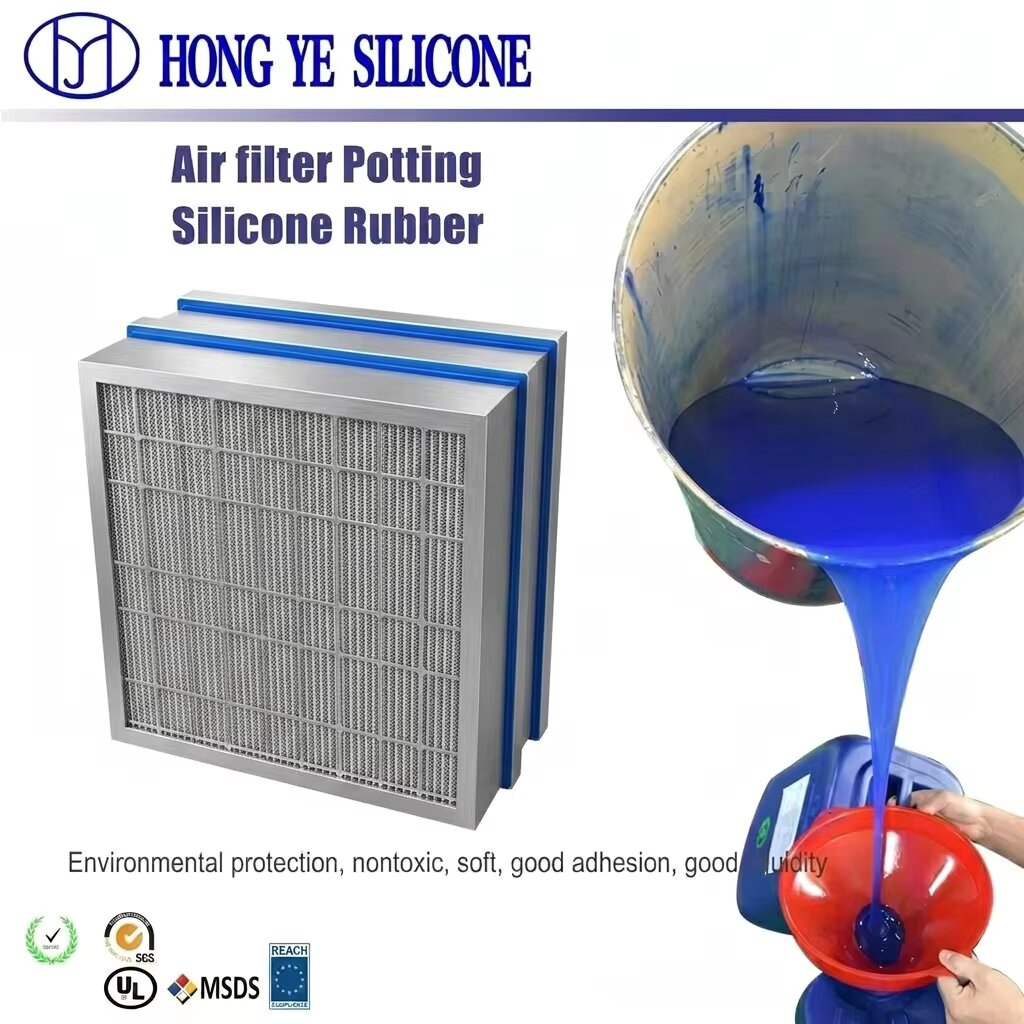
Oil bleeding jelly gel cause solution. Hong Ye HY-9400 has become a benchmark grade for cleanroom and apparel customers who have seen oily residue from competitor gels. Oil bleed is caused by low molecular weight siloxanes in cheap formulations; HY-9400 uses a refined polymer network with volatility below 0.1 percent. As a two-component addition-cure platinum jelly gel mixed 1:1 by weight, HY-9400 offers a viscosity of 1200+/-300 mPa.s, 20 to 40 minute operation time and 4 to 6 hour room temperature cure. It self-levels after pouring without vacuum degassing, and cures into a permanently soft, tacky, jelly-like mass that remains serviceable across a temperature range of -60 to 200 degrees Celsius. The cured gel resists ozone, UV, moisture, salt spray and common cleanroom disinfectants, with linear shrinkage below 0.1 percent and dielectric strength above 20 kV/mm.
This technical analysis examines the material properties, installation methodology and field performance of HY-9400 blue jelly gel as used in this application area. Engineers and procurement managers will find actionable data on viscosity, cure schedule, penetration and chemical compatibility to support specification decisions.
2 Product Requirements
In this application, the gel sealant must meet the following requirements:
• Permanent tack and self-healing: remain soft and adhesive throughout service life, re-sealing after module replacement without re-pouring.
• Self-leveling viscosity of 1200-2000 mPa·s allows the gel to flow into narrow channels and corners without vacuum assistance.
• Wide service temperature range of -60°C to 200°C ensures reliable performance in outdoor and industrial environments.
• Low shrinkage below 0.1% with no condensation by-products eliminates voids, odor and corrosion risks.
• Strong electrical insulation: dielectric strength above 20 kV/mm and volume resistivity above 10^14 Ω·cm.
• Chemical resistance against ozone, UV radiation, moisture, salt spray and common disinfectants.
• Regulatory compliance: RoHS 2.0 and REACH SVHC as baseline; FDA 21 CFR 177.2600 and LFGB available for food-grade or skin-contact grades.
3. Grade Selection Guide
|
Model |
Color |
Penetration (0.1mm) |
Tack |
Typical Applications |
|
HY-9400 |
Blue |
200 |
High |
HEPA/ULPA filter gel channels, biosafety cabinet seals, applications requiring strong adhesion and re-sealability |
|
HY-9405 |
Blue |
170 |
Medium |
Electronic potting, sensor encapsulation, applications balancing softness and dimensional stability |
|
HY-9409 |
Transparent |
150 |
Low |
Transparent gel pads, intimate apparel, prosthetic devices, applications requiring visual clarity or easy repositioning |
4 General Technical Parameters
|
Parameter |
Value |
|
Product Type |
Two-component addition-cure platinum-catalyzed silicone jelly gel (RTV-2) |
|
Mixing Ratio |
Part A : Part B = 1 : 1 by weight |
|
Cure System |
Platinum addition cure, no condensation by-products |
|
Viscosity (mixed) |
1200-2000 mPa·s depending on grade |
|
Cone Penetration |
150-200 (1/10 mm) |
|
Working Time |
20-40 minutes at 25°C |
|
Cure Time |
4-6 h at 25°C; 30-60 min at 60-80°C |
|
Operating Temp |
18-35°C recommended for pouring |
|
Service Temp |
-60°C to 200°C continuous |
|
Linear Shrinkage |
<0.1% |
|
Dielectric Strength |
>20 kV/mm |
|
Volume Resistivity |
>1×10^14 Ω·cm |
|
Thermal Conductivity |
0.18-0.22 W/(m·K) |
|
Self-Leveling |
Yes, no vacuum degassing required |
|
Self-Healing |
Yes |
|
Shelf Life |
12 months sealed below 25°C |
|
Packaging |
1kg, 5kg, 20kg, 25kg, 200kg kits (A+B) |
5 Frequently Asked Questions
Q: Why is my cured gel sticky or soft in some areas?
A: Usually inaccurate 1:1 ratio, insufficient mixing, or unstirred Component B. Sulfur/tin/amine/phosphorus contamination inhibits platinum cure. Use clean dedicated tools.
Q: Can I cure faster with heat?
A: Yes, 30-60 min at 60-80°C. Do not exceed 100°C to avoid surface skinning and trapped bubbles.
Q: Is vacuum degassing needed?
A: Generally no. HY-94 self-levels and self-degasses. Only optical or high-voltage electronic applications may require vacuum.
Q: What is the shelf life?
A: 12 months sealed below 25°C away from sunlight. Reseal after opening and use within 3 months. Always stir B before use.
Q: Is it safe for skin contact?
A: HY-9400 and HY-9405 can meet FDA 21 CFR 177.2600 and LFGB requirements on request. Standard grades meet RoHS 2.0 and REACH SVHC.
Q: What is the coverage of a 20kg kit?
A: Approximately 60-100 standard 610×610mm HEPA modules. Formula: channel length × width × depth × 0.97 g/cm³.
Q: Can cured gel be repaired?
A: Yes. HY-94 self-heals after minor displacement. For major repairs, remove contaminated gel, clean with isopropyl alcohol and re-pour fresh gel.
6 Quality Assurance & Certification
• ISO 9001 certified manufacturing facility in Shenzhen with 20,000 square meters of production area.
• Monthly addition-cure silicone capacity exceeding 500 tons, ensuring stable supply for volume orders.
• Every batch is released with a Certificate of Analysis covering viscosity, cone penetration, cure time, color and tack.
• Documented quality control procedures span incoming raw material inspection, in-process monitoring and finished-product testing.
• Technical team with an average of 10 or more years of silicone industry experience provides formulation and troubleshooting support.
• Custom formulation, color matching and private-label or neutral packaging are available for volume customers.
6.2 Certifications & Compliance Documents
• RoHS 2.0 — restriction of hazardous substances in electrical and electronic equipment.
• REACH SVHC — EU chemicals regulation compliance.
• ISO 9001:2015 — quality management system certification.
• FDA 21 CFR 177.2600 — available on request for food-contact and skin-contact grades.
• LFGB — available on request for food-grade applications in the European market.
• MSDS/SDS — safety data sheet provided with every shipment.
7 Conclusion
Hong Ye HY-9400 blue jelly gel provides a technically proven, field-validated sealing solution for this application. Its self-leveling viscosity, 20-40 minute working time, 4-6 hour room-temperature cure, shrinkage below 0.1% and wide -60°C to 200°C service range make it suitable for demanding sealing and potting requirements. Proper surface preparation, thorough B-component stirring before each use and accurate 1:1 weight-ratio mixing are the three factors that determine success; when these are followed, the gel delivers multi-year zero-leakage performance with minimal maintenance.
 ∷
∷