Pad Printing in New Energy Vehicle and Auto Parts Industry: A
As the global new energy vehicle industry develops rapidly, manufacturing processes and quality requirements for auto parts continue to improve. In auto parts production, marking and printing are indispensable, including button symbols, instrument scales, part numbers, safety warning labels, and brand logos. Padprinting, with its unique advantage of printing clear and fine patterns on irregular curved surfaces, concave-convex surfaces, and small areas, is widely used in the auto parts industry. Shenzhen Hongyejie Technology Co., Ltd. (Hongye Silicone) analyzes the application scenarios, technical requirements, and challenges of pad printing in the new energy vehicle and auto parts industry. 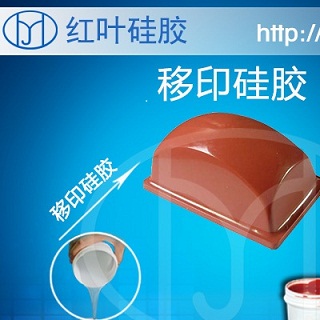
Application Scenarios in Auto Parts
Although new energy vehicles differ from traditional fuel vehicles in powertrain, printing demand for interior, exterior, and electronic components has not decreased. Main application scenarios include:
Automotive Buttons and Switches: Steering wheel buttons, center console buttons, window lift buttons, air conditioning control buttons. These surfaces are often curved or concave-convex, requiring clear and wear-resistant symbols and numbers, making pad printing one of the most suitable processes.
Instrument Panels and Display Panels: Dashboard scales, warning light symbols, display panel border markings. Requirements include fine printing, accurate positioning, UV resistance, and high temperature resistance, all of which pad printing can meet.
Automotive Interior Parts: Interior trim strips, door armrests, center console trim panels with brand marks, function symbols, and texture patterns. Pad printing can print on various materials and shapes of interior parts.
Battery Components and Charging Parts: New energy vehicle battery housings, battery management system modules, charging interfaces, charging pile components requiring part numbers, warning labels, and parameter information. Pad printing prints clear markings on plastic and metal surfaces.
Automotive Electronic Components: Sensors, connectors, control modules and other small electronic components requiring identification printing. Pad printing prints fine text and patterns on small areas and irregular surfaces.
Automotive Exterior Parts: Vehicle emblems, trim strips, door handles, mirror housings requiring markings and patterns with good weather resistance and fade resistance.
Technical Requirements for Automotive Pad Printing
The automotive industry has strict quality requirements for parts, and pad printing must meet a series of technical requirements:
High Wear Resistance: Automotive buttons are pressed repeatedly every day. Printed patterns must be wear-resistant, remaining clear after tens of thousands of presses. This requires good ink pick-up from the pad, strong ink adhesion, and a wear-resistant long-life pad.
Weather Resistance: Automotive interior parts are exposed to sunlight with large temperature variations. Printed patterns must be UV-resistant, high-temperature resistant, and low-temperature resistant, without fading, cracking, or peeling.
Printing Precision: Automotive button symbols and instrument scales require accurate positioning, sharp edges, and fine lines, demanding high precision from the pad and stable ink transfer.
Environmental Requirements: Automotive interior parts directly contact the human body and must meet automotive industry environmental standards such as VOC emission requirements and hazardous substance restrictions. Both pad printing silicone and ink must be eco-friendly and non-toxic.
Batch Consistency: Auto parts are produced in large volumes, requiring consistent printing results across batches including color, clarity, and positioning, which demands high batch stability from pad printing silicone.
Multi-Material Adaptation: Auto parts use diverse materials including ABS, PC, PP, PVC, metal, and glass. Pad printing must achieve good results on different materials.
Challenges in the New Energy Vehicle Industry
The rapid development of new energy vehicles brings new opportunities and challenges to pad printing:
New Material Printing Adaptation: New energy vehicles extensively use new materials such as lightweight composites, new engineering plastics, and special battery housing coatings. These materials have different surface energies than traditional materials, requiring re-verification of ink adhesion and pad printing effects.
Large-Size Curved Surface Printing: Large curved components such as center control screens and integrated interior panels require large-size, specially shaped pad printing heads beyond traditional pad dimensions, demanding higher silicone performance and mold fabrication capabilities.
High-Beat Production Requirements: Rapidly growing new energy vehicle output accelerates parts production 节拍,requiring faster pad printing, longer pad life, and shorter changeover times, demanding higher wear resistance and operational convenience from pad printing silicone.
Intelligence and Automation: Auto parts production increasingly uses automated production lines. Pad printing must integrate with automation equipment, requiring standardized pad installation, convenient replacement, and stable predictable printing results.
Tightening Environmental Regulations: Global automotive environmental regulations continue to tighten, with increasing requirements for VOC emissions, hazardous substance restrictions, and recyclability. Pad printing silicone and ink must continuously upgrade to meet new environmental standards.
Silicone Selection Tips for Automotive Applications
For the special requirements of the automotive industry, Hongye Silicone recommends the following when selecting pad printing silicone:
Select Hardness by Surface Shape: Flat buttons and markings choose medium-hard grades (like Hongye 918) for sharp fine printing; curved and concave-convex surfaces choose general-purpose or slightly softer grades (like Hongye 912, 901) for full contact.
Select Model by Wear Requirement: Frequently pressed buttons choose wear-resistant grades (like Hongye 902, 918) to extend pad life and reduce replacements; decorative markings with less contact can use general-purpose grades.
Value Batch Stability: Large-volume automotive production requires batch consistency. Choose suppliers with strict quality control and stable batches (like Hongye Silicone) to reduce machine adjustments and defects from batch fluctuations.
Focus on Environmental Certification: Choose pad printing silicone that has passed environmental tests and meets automotive VOC requirements to ensure final products pass environmental certification.
Multi-Color Needs Choose Multi-Color Models: Automotive interiors have different color requirements. Choose pad printing silicone offering multiple colors (like Hongye 912 in red, yellow, white, green) to meet different color matching needs.
Verify with Ink and Material: Before using new materials or new inks, always conduct small-batch printing tests to verify adhesion, wear resistance, and weather resistance, confirming requirements are met before mass production.
Hongye Silicone Automotive Industry Solutions
Hongye Silicone has focused on liquid silicone for over 20 years, providing a full range of pad printing silicone products and technical support for the auto parts industry:
912 Multi-Color Eco-Friendly General-Purpose: Multiple colors, stable batches, eco-certified, suitable for routine auto parts printing
902 Wear-Resistant: High wear resistance, long life, suitable for frequently pressed automotive buttons
918 Precision Printing: Sharp edges, clear details, suitable for instrument scales and fine symbols
916 Extra-Soft: Strong deformation capability, suitable for large-curvature curved and irregular parts
928 Addition-Cure: Food-grade eco-friendly, high-end precision printing
The company provides full technical support from model selection to process optimization, recommending the most suitable pad printing silicone model based on specific product material, shape, printing requirements, and automation equipment 情况,and assisting with printing tests and process optimization to help customers improve print quality, reduce production costs, and meet the strict requirements of the automotive industry.
As the new energy vehicle industry continues to develop, pad printing applications in auto parts will expand, and performance requirements for pad printing silicone will continue to rise. Hongye Silicone will continue R&D and innovation, providing higher quality, more eco-friendly, and more stable pad printing silicone products and solutions for the automotive industry.
 ∷
∷