5 Maintenance Tips to Extend Pad Printing Silicone Pad Life b
In pad printing workshops, silicone pads are one of the biggest consumable costs. Many factory owners haven't done the math: if each pad lasts 20% longer, how much money do you save in a year?
Today we share 5 practical silicone pad maintenance tips that are easy to implement and can extend pad life by 30% or more — real cost savings for your business.
Tip 1: "Break In" New Pads Before Production
Many people put brand new pads straight into mass production — this is a mistake. New pads have a layer of mold release residue on the surface, and their surface condition isn't stable yet. Using them immediately can cause uneven ink transfer, blurry patterns, and accelerated wear.
Correct method:
1. Use clear adhesive tape to lift the surface 3-5 times, removing the surface layer
2. Or gently wipe the surface with thinner, then let it dry
3. Do a test run of 30-50 pieces, confirm quality is stable before mass production
It takes an extra 10-15 minutes, but the overall service life of the pad will be significantly longer.
Tip 2: Cleaning Method Determines Pad Life
How do you clean dirty pads? Many people just soak them in solvent or scrub with stiff brushes — both are wrong! The pad surface is delicate; harsh cleaning seriously damages the surface and shortens life dramatically.
Correct cleaning methods (in order of recommendation):
1. Tape method: Use wide clear tape to gently lift ink and dust from the surface — MOST RECOMMENDED, minimum pad damage
2. Lint-free cloth method: Gently wipe with a lint-free cloth dampened with a small amount of thinner — good for more stubborn stains
3. Specialized pad cleaner: Use pad printing pad specific cleaner — effective but slightly higher cost
ABSOLUTELY NO: Stiff brush scrubbing, blade scraping, prolonged solvent soaking, wiping with dirty rags
Tip 3: Storage Matters
Many factories just toss pads aside when done. Next time they use them, they're deformed or covered in dust. Proper storage greatly extends pad shelf life.
Storage essentials:
• Store upright, pad surface facing up, nothing touching the working surface
• Keep in cool, dry place, away from direct sunlight and heat
• Addition cure silicone pads must stay away from sulfur, tin and amine containing materials
• For long-term storage, wrap gently in plastic film to keep dust out
• Never stack soft pads on top of each other
Tip 4: Printing Parameters Affect Pad Life Too
You might not realize it, but printing machine settings also affect pad life. Too much pressure, too fast speed — both accelerate wear.
Optimization suggestions:
• Printing pressure: Set to the minimum pressure that produces clear prints — more pressure = faster wear
• Printing speed: Moderate speed — too fast increases friction, too slow reduces efficiency
• Pad alignment: Ensure pads are centered on plate and substrate to avoid uneven wear
• Regularly check machine condition to avoid abnormal vibration
Tip 5: Rotate Pads — Game Changer
If a station has high volume, prepare 2-3 pads and rotate them. Giving each pad time to "rest and recover" makes the total pad life much longer than using one pad until it fails.
This is because silicone has elastic fatigue — continuous high-intensity use accelerates elastic decay; rotation gives silicone recovery time, naturally extending life.
Let's Do the Math:
If a pad originally lasts 10,000 prints at a cost of $0.10 per 100 prints
With 30% longer life: 13,000 prints at $0.077 per 100 prints
A factory using 1,000 pads per year at $5 each = $50,000/year
30% longer life = $15,000 SAVED per year!
And that's not even counting the time saved from fewer pad changes.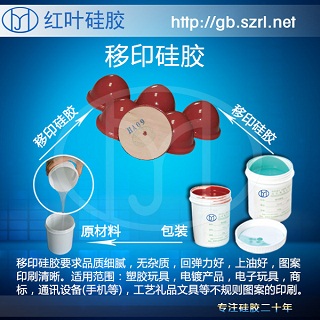
There you have it — 5 practical tips from HYC-Silicone's 20 years of experience working with thousands of pad printing factories. Put them to use and watch your consumable costs go down!
For more pad printing silicone knowledge, follow HYC-Silicone for free technical support and sample testing.
 ∷
∷